Drive bookings and maximize revenue with proven strategies for hotel marketing, direct sales, and dynamic pricing. Learn digital marketing tactics, OTA management, channel optimization, and revenue management techniques specifically tailored for independent and small chain hotels in India.
After two decades in the hospitality industry, I’ve learned that mastering hotel pricing strategies is crucial for success, especially when it comes to working with offline travel agents in India. For resorts and properties in destination locations, the support of offline travel agents in India is not just beneficial—it’s essential for thriving in a competitive market.
Throughout my career, I’ve seen firsthand how the ability to craft compelling rates for these partners can dramatically impact a property’s revenue goals. But it’s not just about the bookings they bring directly. Offline Travel agents in India provide invaluable exposure by suggesting your hotel to their customers and including it in their itineraries, creating a powerful “billboard effect” that can drive bookings through various channels.
Understanding the Offline Travel Agent in India
Before diving into specific pricing strategies, it’s essential to understand the different types of offline travel agents you’ll be working with and the unique value they bring to your property.
Offline B2B Travel Agents
Business-to-Business (B2B) travel agents are powerhouses in the industry, acting as intermediaries between hotels and other businesses or travel agents. They often deal in bulk bookings and have extensive networks that can significantly impact your occupancy rates. Because of their volume potentials, these agents typically require lower rates.
How B2B Travel Agents Work
The Middlemen of the Travel Industry – Business-to-Business (B2B) travel agents act as intermediaries between hotels and other businesses or travel agencies. They don’t deal directly with the end travelers but instead work with other companies in the travel industry.
Bulk Bookings and Negotiated Rates – One of the primary ways B2B agents operate is through bulk bookings. They negotiate special rates with hotels for large numbers of rooms. This allows them to offer competitive prices to their clients, who are often other travel agencies or corporate clients.
Wide Network and Global Reach – B2B agents typically have extensive networks and relationships with hotels worldwide. This global reach allows them to offer a wide range of options to their clients, from budget accommodations to luxury resorts.
Technology and Booking Systems – Many B2B agents use sophisticated booking systems and technology platforms. These tools help them manage large volumes of bookings efficiently and provide real-time information to their clients.
Corporate Travel Management – A significant part of B2B travel agents’ work involves managing corporate travel. They help businesses book accommodations for their employees, manage travel policies, and often provide reporting and analytics on travel spending.
Offline B2C Travel Agents
Business-to-Consumer (B2C) travel agents work directly with end consumers. These agents often have a more personal relationship with their clients and can influence travel decisions based on their expertise and recommendations.
How B2C Travel Agents Work
Direct Customer Interaction – Business-to-Consumer (B2C) travel agents work directly with the end travelers. They help individuals, families, and small groups plan and book their trips.
Personalized Service and Expert Advice – B2C agents offer personalized service to their clients. They use their knowledge and experience to recommend destinations, accommodations, and activities that suit each traveler’s preferences and budget.
Booking and Itinerary Planning – These agents handle all aspects of trip planning. This includes booking flights, hotels, car rentals, and activities. They often create detailed itineraries for their clients, taking care of all the logistics.
Problem Solving and Support – B2C agents provide support before, during, and after the trip. If problems arise during travel, such as flight cancellations or overbooking, the agent can help resolve these issues.
Access to Special Deals and Packages – Through their industry connections, B2C agents often have access to special deals and packages that may not be available to the general public. They can pass these savings on to their clients.
Niche and Specialized Travel – Many B2C agents specialize in specific types of travel, such as luxury vacations, adventure trips, or destination weddings. This specialization allows them to offer expert advice in their chosen niche.
Destination Management Companies (DMCs)
DMCs are specialized service providers offering comprehensive travel planning for specific destinations. Their in-depth local knowledge can be a significant asset in attracting and satisfying guests.
How Destination Management Companies Work
Local Experts and On-the-Ground Support – Destination Management Companies (DMCs) are local experts in a specific geographic area. They provide on-the-ground support and services for travelers and other travel businesses.
Comprehensive Travel Planning – DMCs offer end-to-end travel planning services. This includes arranging transportation, accommodations, activities, and experiences unique to their location.
Customized Experiences and Local Knowledge – One of the key strengths of DMCs is their ability to create customized, authentic experiences. They use their deep local knowledge to provide unique insights and access to local culture and attractions.
Event Management and MICE Services – Many DMCs specialize in managing events and conferences. They handle all aspects of Meetings, Incentives, Conferences, and Exhibitions (MICE) services in their destination.
Supplier Management and Quality Control – DMCs work with a network of local suppliers, including hotels, transportation companies, and activity providers. They manage these relationships and ensure quality control for their clients.
Risk Management and Local Compliance – An important role of DMCs is managing risk and ensuring compliance with local laws and regulations. This is particularly valuable for international travelers or businesses unfamiliar with the destination.
Cultural Bridge and Language Support – DMCs often serve as a cultural bridge, helping visitors navigate local customs and traditions. They also provide language support, which can be crucial in destinations where English is not widely spoken.
While there are several other types of offline travel agents in India catering to various niches and market segments, for the purpose of this guide, we will focus primarily on B2B travel agents, B2C travel agents, and Destination Management Companies (DMCs), as these are the most common and impactful for most hotels and resorts.
Exposure and the Billboard Effect the Offline Travel Agents Bring In
Travel agents give your property exposure by suggesting it to their customers and including it in their itineraries. This creates a powerful “billboard effect” that can drive bookings through various channels. It’s important to recognize that a booking might not always come directly through the agent. Due to this billboard effect, bookings may flow directly or through OTAs as well.
Effective Pricing Strategies
Now, let’s delve into some effective pricing strategies that have consistently helped maximize revenue while maintaining strong relationships with agent partners.
Separate Rates for B2B and B2C Agents – Implementing distinct rate structures for B2B and B2C agents allows you to cater to the unique needs of each agent type while optimizing your revenue potential.
Seasonal and Off-Season Pricing – Each destination has its own season and off-season periods. Offer different rates for season and offseason to your agents.
Group Rates and Incentives – Encourage group bookings by offering attractive packages, such as one complimentary room for every ten rooms booked.
Ensure there is enough gap for markup – While pricing, ensure that the agent has enough gap between your online rate and the rate issued by the travel agent.
Ensure the agent is able to give a discount – Ensure that the agent is able to offer his customer at least 5% discount and still earn a margin of 10% to 15%.
Sample pricing structure for offline travel agents in India
Special Services and Facilities for Travel Agents
Offering unique amenities and services can significantly enhance your appeal to travel agents and set your property apart from competitors.
DMC-Specific Amenities – Cater to the specific needs of DMCs, such as providing dedicated spaces for drivers or special group handling procedures.
Flexible Payment Options – Implement flexible payment options to make your property more attractive to travel agents and help improve their cash flow.
Comprehensive Proposals – Ensure your proposals to travel agents are thorough and highlight all the unique selling points of your property.
Building Strong Relationships with Offline Travel Agents
Success in the hospitality industry is built on strong relationships, particularly when it comes to working with travel agents.
Itinerary Inclusion
Getting your property included in a travel agent’s itinerary is crucial for securing bookings. It’s not enough to just have a relationship with the agency’s manager or owner. Make sure your property is featured in their standard packages and suggested itineraries.
Rate Parity Considerations
Maintaining rate parity across different channels is crucial for building trust with your offline travel agent partners and avoiding conflicts. Customers often rate shop, checking your hotel’s website or calling directly. It’s critical to ensure rate parity at this point. If an agent discovers that you’re offering lower rates directly, they may become frustrated and stop promoting your property.
Relationships at All Levels
While it’s important to cultivate relationships with agency owners and managers, don’t overlook the frontline agents. These are the individuals who interact directly with potential guests and make recommendations. Building strong relationships at all levels of an agency can significantly increase your chances of being recommended to clients.
Regular Communication – Maintain open lines of communication with your travel agent partners, keeping them updated on blackout dates, special promotions, and property improvements.
Incentive Programs for Offline Travel Agents – Implement enticing incentives to motivate travel agents to prioritize your property, such as tiered commission structures or familiarization trips.
Attending Travel Trade Fairs – Participate in industry events to network with travel agents, showcase your property, and stay abreast of industry trends.
Conclusion
Mastering the art of pricing and relationship management with travel agents is crucial for success in the hospitality industry, especially for resorts and destination properties. The strategies shared here – from differentiated pricing for B2B and B2C agents to creating compelling incentive programs – have been refined through years of practical experience.
Remember, success is not just about offering the lowest rates. It’s about understanding the needs of different types of agents, providing value beyond just a room, and building lasting relationships at all levels of travel agencies. Recognize the powerful billboard effect that travel agents create and ensure rate parity to maintain their trust and continued promotion of your property.
By implementing these strategies and continuously adapting to the changing landscape of the travel industry, you can significantly boost your hotel’s performance and profitability. Start by reviewing your current pricing structure and agent relationships, and identify areas where you can add value or improve communication. Every step towards better agent management can lead to significant improvements in your hotel’s success.
About the Author:Azhar Umar is a seasoned hospitality professional with over two decades of experience in the industry. As a former hotelier and current CEO of Zarnik, a leading B2B e-commerce platform for hotel supplies, Azhar brings a wealth of practical knowledge in hotel operations, revenue management, and travel agent partnerships. His insights are drawn from years of hands-on experience working with various types of travel agents and optimizing pricing strategies for hotels across India.
Do you have questions about working with offline travel agents or need further clarification on any points discussed in this article? We encourage you to leave a comment below. If you’d like to connect professionally or discuss this topic further, you can reach out to Azhar on LinkedIn. He’s always eager to share insights and help industry professionals navigate the complexities of travel agent partnerships.
Tour operators and travel agents have traditionally played distinct roles in the travel industry. However, recent trends have begun to blur these lines in some parts of the world. This article will help you understand the historical differences and the current state of these two key players in the world of travel.
Traditional Roles
What is a Travel Agent?
Historically, a travel agent’s primary function was flight ticketing and related services. As Ratheesh R Nath, Chairman and Managing Director of Paradise Holidays, explains:
“The real meaning of Travel Agent is one who does the flight ticketing… But lately most of such agents started tour operations too. If you look back, the IATA agents used to do only ticketing or visa etc.”
Travel agents typically:
Book flights and handle ticketing
Assist with visa applications
Provide information about travel requirements
Offer travel insurance
What is a Tour Operator?
Traditionally, tour operators focused on creating and managing travel packages. They would:
Design complete holiday packages
Negotiate deals with hotels and local service providers
Set prices for vacation packages
Ensure the quality of accommodations and services
Create travel brochures and marketing materials
The Evolving Landscape
The distinction between travel agents and tour operators has become less clear in recent years, particularly in some regions. As Ratheesh R Nath observes:
“Frankly speaking, now we can’t differentiate between Travel agent and tour operator.”
This blurring of lines is due to many travel agents expanding their services to include tour operations, offering more comprehensive travel solutions to their clients.
However, it’s important to note that this trend isn’t universal. Mr. Nath points out a significant regional difference:
“In Europe, still Travel agents stick to flight and train ticketing.”
This suggests that in some parts of the world, particularly in Europe, the traditional roles remain more distinct.
Key Differences That May Still Apply
While roles are converging in some areas, there can still be differences:
Scope of Services:
Traditional Travel Agents: Primarily handle bookings and ticketing
Tour Operators: Create and manage comprehensive travel packages
Business Model:
Travel Agents: Often earn commissions on bookings
Tour Operators: Usually profit from the markup on their packages
Customer Interaction:
Travel Agents: Typically have more direct interaction with travelers
Tour Operators: May have less direct contact with end consumers
Risk and Responsibility:
Travel Agents: Generally bear less financial risk
Tour Operators: Often have more financial investment in their packages
Conclusion
The travel industry is evolving, and with it, the roles of travel agents and tour operators are changing. While historically these were distinct professions, in many parts of the world, the line between them has blurred significantly. However, regional differences persist, with some markets maintaining clearer distinctions between these roles.
For travelers, this evolution means potentially more comprehensive services from a single provider in some regions, while in others, you may still need to distinguish between travel agents for ticketing and tour operators for package holidays.
Understanding these nuances can help you navigate the modern travel landscape more effectively, whether you’re booking a simple flight or planning a complex itinerary.
About the Author: Azhar Umar is a hospitality industry expert with extensive experience working with both tour operators and travel agents. With a passion for helping people understand the intricacies of the travel world, Azhar brings clarity to complex travel, tourism and hospitality industry concepts, incorporating insights from industry leaders to provide the most current and accurate information.
In recent years, India’s travel industry has undergone a dramatic transformation, with online bookings becoming increasingly prevalent. As the country’s digital infrastructure improves and smartphone usage skyrockets, Online Travel Agencies (OTAs) have become critical players in the travel ecosystem. For hoteliers and property owners, understanding this landscape is crucial, as is knowing how to optimize your OTA listings to stand out in a competitive market.
This article provides an in-depth look at the top OTAs in India, their market positions, and effective strategies for maximizing your visibility on these platforms. Before we dive into the list, it’s worth noting that each OTA has its unique strengths and audience. To make the most of your online presence, consider implementing these 15 OTA listing optimization strategies across all platforms you use.
Now, let’s explore the top OTAs in Indian who are dominating the market:
Key Features: Review platform with booking capabilities
Notable: Influential in travel decision-making due to its vast collection of user reviews
Optimization Tip: Actively manage your Tripadvisor presence, responding to reviews and keeping your information up-to-date. Learn more about managing online reviews.
Notable: Powers many smaller OTAs and travel agents in India
Optimization Tip: Ensure your property is listed with TBO to increase your visibility across multiple smaller OTAs.
Key Trends Shaping India’s OTA Landscape
Mobile-First Approach: With increasing smartphone penetration, OTAs are focusing on mobile apps and mobile-optimized websites. Ensure your listings are mobile-friendly across all platforms.
Personalization: OTAs are leveraging AI and machine learning to offer personalized recommendations and deals. Provide detailed information about your property to help these algorithms match you with the right guests.
Alternative Accommodations: There’s growing interest in unique stays, driving the growth of platforms like Airbnb. If you offer a unique experience, make sure to highlight it in your listings.
Domestic Travel Focus: Post-pandemic, there’s a strong emphasis on domestic travel and staycations. Tailor your offerings and descriptions to appeal to local travelers.
Integrated Services: OTAs are expanding beyond travel to offer complementary services like food delivery and local experiences. Consider partnering with local attractions or restaurants to enhance your offerings.
Optimizing Your Presence Across OTAs
While each OTA has its unique features, there are some universal strategies you can apply to optimize your listings across all platforms:
Use high-quality images: Visual appeal is crucial in the travel industry. Invest in professional photography to showcase your property at its best.
Write compelling descriptions: Highlight what makes your property unique and appeal to your target audience’s needs and desires.
Maintain rate parity: Consistent pricing across all platforms builds trust with potential guests and maintains good relationships with OTAs.
Respond to reviews promptly: Engage with both positive and negative reviews to show that you value guest feedback.
Keep your information up-to-date: Regularly update your amenities, policies, and availability to ensure accuracy across all platforms.
For a more comprehensive guide on how to make your listings stand out, check out our detailed article on 15 OTA listing optimization strategies. These tactics can help you increase your visibility, improve your conversion rates, and ultimately drive more bookings across all OTA platforms.
The Future of OTAs in India
The Indian OTA market is poised for significant growth, with projections suggesting it could reach $15 billion by 2024. As the market evolves, staying ahead of the curve in terms of optimization strategies will be crucial for success.
For hoteliers and property owners, having a strong presence across multiple OTAs is essential. However, it’s equally important to optimize your OTA listings to stand out in this competitive landscape. By understanding the strengths of each platform and tailoring your approach accordingly, you can maximize your visibility and bookings in India’s booming online travel market.
Remember, the key to success in the OTA landscape is not just about being present on multiple platforms or on all the top OTAs in India, but about presenting your property in the best possible light on each one. By implementing effective optimization strategies, you can ensure that your property stands out, regardless of which OTA a potential guest is using.
In recent years, India’s travel industry has undergone a dramatic transformation, with online bookings becoming increasingly prevalent. As the country’s digital infrastructure improves and smartphone usage skyrockets, Online Travel Agencies (OTAs) have become critical players in the travel ecosystem. For hoteliers and property owners, understanding this landscape is crucial, as is knowing how to optimize your OTA listings to stand out in a competitive market.
This article provides an in-depth look at the top OTAs in India, their market positions, and effective strategies for maximizing your visibility on these platforms. Before we dive into the list, it’s worth noting that each OTA has its unique strengths and audience. To make the most of your online presence, consider implementing these 15 OTA listing optimization strategies across all platforms you use.
Now, let’s explore the top OTAs in Indian who are dominating the market:
Key Features: Review platform with booking capabilities
Notable: Influential in travel decision-making due to its vast collection of user reviews
Optimization Tip: Actively manage your Tripadvisor presence, responding to reviews and keeping your information up-to-date. Learn more about managing online reviews.
Notable: Powers many smaller OTAs and travel agents in India
Optimization Tip: Ensure your property is listed with TBO to increase your visibility across multiple smaller OTAs.
Key Trends Shaping India’s OTA Landscape
Mobile-First Approach: With increasing smartphone penetration, OTAs are focusing on mobile apps and mobile-optimized websites. Ensure your listings are mobile-friendly across all platforms.
Personalization: OTAs are leveraging AI and machine learning to offer personalized recommendations and deals. Provide detailed information about your property to help these algorithms match you with the right guests.
Alternative Accommodations: There’s growing interest in unique stays, driving the growth of platforms like Airbnb. If you offer a unique experience, make sure to highlight it in your listings.
Domestic Travel Focus: Post-pandemic, there’s a strong emphasis on domestic travel and staycations. Tailor your offerings and descriptions to appeal to local travelers.
Integrated Services: OTAs are expanding beyond travel to offer complementary services like food delivery and local experiences. Consider partnering with local attractions or restaurants to enhance your offerings.
Optimizing Your Presence Across OTAs
While each OTA has its unique features, there are some universal strategies you can apply to optimize your listings across all platforms:
Use high-quality images: Visual appeal is crucial in the travel industry. Invest in professional photography to showcase your property at its best.
Write compelling descriptions: Highlight what makes your property unique and appeal to your target audience’s needs and desires.
Maintain rate parity: Consistent pricing across all platforms builds trust with potential guests and maintains good relationships with OTAs.
Respond to reviews promptly: Engage with both positive and negative reviews to show that you value guest feedback.
Keep your information up-to-date: Regularly update your amenities, policies, and availability to ensure accuracy across all platforms.
For a more comprehensive guide on how to make your listings stand out, check out our detailed article on 15 OTA listing optimization strategies. These tactics can help you increase your visibility, improve your conversion rates, and ultimately drive more bookings across all OTA platforms.
The Future of OTAs in India
The Indian OTA market is poised for significant growth, with projections suggesting it could reach $15 billion by 2024. As the market evolves, staying ahead of the curve in terms of optimization strategies will be crucial for success.
For hoteliers and property owners, having a strong presence across multiple OTAs is essential. However, it’s equally important to optimize your OTA listings to stand out in this competitive landscape. By understanding the strengths of each platform and tailoring your approach accordingly, you can maximize your visibility and bookings in India’s booming online travel market.
Remember, the key to success in the OTA landscape is not just about being present on multiple platforms or on all the top OTAs in India, but about presenting your property in the best possible light on each one. By implementing effective optimization strategies, you can ensure that your property stands out, regardless of which OTA a potential guest is using.
In today’s digital-first hospitality landscape, OTA listing optimization is crucial for hotels aiming to maximize their online visibility and bookings. This comprehensive guide explores 15 proven strategies for effective OTA listing optimization, helping you attract more guests and boost your hotel’s performance on these vital platforms.
Key OTA Listing Optimization Strategies
Use High-Quality Visuals
Showcase your property with professional, high-resolution photos
Include images of all room types, amenities, and unique features
Consider adding virtual tours to give potential guests a more immersive experience
Optimize Content with Location Keywords
Incorporate relevant location keywords in your property title and description
Mention nearby landmarks, attractions, and neighborhoods
Use local terms and colloquialisms that potential guests might search for
Example: “Beachfront Hotel in South Mumbai, 5 minutes from Gateway of India”
Maintain Rate Parity
Ensure consistent pricing across all distribution channels
Avoid conflicts with OTAs by maintaining agreed-upon rate parity
Use rate parity tools to monitor and manage your pricing effectively
Respond Promptly to Reviews
Set up alerts for new reviews and respond within 24-48 hours
Address negative feedback professionally and highlight steps taken to improve
Thank guests for positive reviews and encourage them to return
Offer Pay-at-Hotel Option
Provide flexibility for guests who prefer to pay upon arrival
Clearly communicate any differences in rates between prepaid and pay-at-hotel options
Ensure your property management system can handle both payment methods efficiently
Implement Free Cancellation Policies
Offer free cancellation up to a certain date to encourage bookings
Clearly state the terms and cutoff date for free cancellation
Consider tiered cancellation policies based on the booking window
Provide Refundable and Non-Refundable Options
Offer both refundable and non-refundable rates to cater to different guest preferences
Use non-refundable rates to advertise lower prices and attract price-sensitive travelers
Ensure the benefits and restrictions of each option are clearly communicated
Diversify Room Options
Offer rooms with and without breakfast, especially for business hotels
Clearly display the price difference between these options
Highlight the convenience and value of including breakfast in the room rate
Implement Flexible Check-In/Check-Out Policies
Offer free early check-in and late check-out when possible
Communicate this policy clearly in your OTA listings to attract guests with irregular travel schedules
Consider offering this as a perk for direct bookings or loyalty program members
Provide Complimentary Shuttle Services
If your hotel is near an airport, railway station, golf course, or event venue, offer free shuttle services
Highlight this service prominently in your OTA listings
Clearly communicate shuttle schedules and any booking requirements
Offer Free Wi-Fi
Provide complimentary Wi-Fi to all guests
Highlight this amenity prominently in your OTA listings
Consider offering premium high-speed options for an additional fee
Implement Family-Friendly Policies
Offer free stay and meals for children under a certain age
Clearly communicate your child policy in OTA listings
Consider providing family-specific amenities or services to attract this market segment
Leverage OTA Promotion Tools
Participate in OTA marketing programs to increase visibility
Use promotional tools like “Deal of the Day” or “Mobile-Only Deals” when available
Monitor the ROI of these promotions and adjust your strategy accordingly
Maintain an Updated Calendar
Keep your availability calendar current across all OTAs
Use a channel manager to avoid overbookings and maintain consistency
Consider implementing a minimum length of stay during high-demand periods
Monitor and Analyze OTA Performance
Regularly review your OTA performance metrics
Analyze booking patterns, conversion rates, and guest demographics
Use these insights to refine your pricing and OTA listing optimization strategies
Here are some examples of best managed OTA listings you can look at:
Effective OTA listing optimization is an ongoing process that requires consistent attention and refinement. By implementing these strategies, hoteliers can significantly enhance their property’s performance on OTA platforms, driving more bookings and maximizing revenue.
Remember to regularly review and update your OTA listings, keeping them fresh and competitive. Stay informed about new features and tools offered by OTAs, and be prepared to adapt your OTA listing optimization strategy as the market evolves. Pay particular attention to your use of location keywords, as this can significantly impact your visibility in search results.
By focusing on these key areas of OTA listing optimization, including strategic use of location-based content, you can improve your hotel’s visibility, attract more guests, and ultimately boost your bottom line in the competitive world of online travel bookings.
In the world of hospitality business, understanding the purpose of revenue management is crucial for achieving profitability and success. While it may seem logical for managers to split their time equally between generating revenue and controlling expenses, successful revenue management takes a different, customer-centric approach.
The primary purpose of revenue management is not to cleverly increase prices to unsuspecting customers in order to maximize short-term profits. Instead, the main goal of revenue management is to provide value to customers, and in doing so, increase their wealth, loyalty, and repeat visits. By effectively serving customer needs, businesses will naturally prosper, achieving high levels of operating profits and attractive returns on investment for their owners.
This customer-centric philosophy, which is at the core of the purpose of revenue management, has been embraced by industry leaders such as Henry Ford, who famously said, “A business absolutely devoted to service will have only one worry about profits. They will be embarrassingly large.” Similarly, Ray Kroc, the founder of McDonald’s, emphasized the importance of putting the customer first: “If you work just for money, you’ll never make it; but if you love what you’re doing and you always put the customer first, success will be yours.”
Professional revenue management aims to significantly increase company profits and owners’ return on investment through advanced revenue management and strategic pricing techniques. However, these techniques must always be driven by customer needs, not company needs. To fulfill the purpose of revenue management effectively, you must become a customer-centric manager of revenues, employing pricing strategies that result in charging prices that informed customers will willingly pay for the right products, in the right quantities, through the right channels, and at the right times.
Aligning the Purpose of Revenue Management with Business Goals
One example of a company that has successfully implemented a customer-centric revenue management strategy is Southwest Airlines. By offering low fares, flexible booking options, and excellent customer service, Southwest has consistently achieved high levels of customer satisfaction and loyalty. This, in turn, has led to strong financial performance and sustained growth for the company, demonstrating how aligning the purpose of revenue management with business goals can lead to success.
Another example is the hotel chain Marriott International. Marriott’s revenue management team uses advanced data analytics and customer segmentation to offer personalized pricing and promotions to its guests. By tailoring its offerings to the specific needs and preferences of different customer groups, Marriott has been able to drive increased revenue and profitability while maintaining high levels of customer satisfaction.
Setting the right price is a complex process that requires revenue managers and marketers to understand their customers well and apply sophisticated pricing strategies with great skill. By focusing on providing true value to customers in every transaction, revenue managers help their businesses succeed in the long run.
To be an effective revenue manager, the following are the things you should be willing to do on an ongoing basis:
Continuously gather and analyze customer data to better understand their needs and preferences.
Segment your customer base and develop targeted pricing strategies for each segment.
Monitor competitor pricing and adjust your strategies accordingly.
Regularly review and optimize your pricing and revenue management processes.
Foster a culture of customer-centricity throughout your organization.
By embracing a customer-centric approach to revenue management and consistently seeking to provide value to your customers, you’ll be well on your way to driving sustainable growth and success for your organization.
This article is just the beginning of an ongoing series on revenue management by Zarnik Hospitality Review. In the coming articles, we will delve deeper into the various aspects of revenue management, including advanced pricing strategies, data analytics, and customer segmentation. Stay tuned for more valuable insights and practical tips to help you excel in the dynamic world of hospitality revenue management.
Looking for the best blogs on hotel revenue management? Check out these top resources:
IDeaS Blog (https://ideas.com/blog) – Offering expert insights, industry trends, and actionable advice from a leading revenue management solutions provider.
Xotels Blog (https://www.xotels.com/en/category/blog/revenue-management) – Featuring in-depth articles and how-to guides on pricing strategies, distribution channels, and market segmentation from a renowned hospitality consulting firm.
HotelPartner Blog (https://hotelpartner.com/revenue-management-blog/?noredirect=en) – Providing practical tips and strategies for hotel professionals looking to improve their revenue management skills, from a leading hotel management software provider.
Revfine Blog (https://www.revfine.com/category/hotel-blog/revenue-management/) – Offering data-driven insights and practical advice on pricing strategies, demand forecasting, and competitor analysis from a company specializing in hotel marketing and revenue management tools.
Whether you’re a seasoned professional or just starting out, these blogs are invaluable resources for staying up-to-date on the latest trends and techniques in hotel revenue management.
In the intricate landscape of the hospitality industry, a name is often the first handshake between a hotel and its guest. But how does one encapsulate an entire brand’s ethos into a singular name? Delve into the 3D Framework for Hotel Branding—a methodology that isn’t about graphics, but rather about depth, dimension, and dynamism in naming.
The Three Tiers of Naming
Within hospitality, naming splinters into three decisive layers:
Company
Brand
Property
Each has its distinct strategic weight and influence on a guest’s perception and experience.
Company Name: The Umbrella Identity
Imagine the company name as the grand tree, with various brands and properties as its branches. This title is the foundation, often less visible to guests but paramount for B2B interactions, partnerships, and corporate identity.
Considerations:
Broadness: Names like ‘Marriott International’ resonate as they’re expansive, accommodating diverse brands beneath them.
Longevity: Aim for a title that remains pertinent across expansions or pivots.
Legacy and History: Leveraging roots can provide a rich tapestry of stories, whether they reflect founders, missions, or inspirational journeys.
Brand Name: The Heart of Your Hospitality Venture
This is where the magic lies for guests. Their memories, whether of luxurious stays or sumptuous meals, tie back to this title.
Considerations:
Short and Concise: Names like ‘Ritz’ linger in memory because of their brevity and impact.
Domain & Trademark Availability: Securing a unique digital footprint and legal protection is paramount.
Values & Ethos: A brand like ‘Four Seasons’ promises excellence year-round, resonating with its core values.
Digital Presence: It’s vital the name shines brightly in the vast expanse of the internet, from search engines to social media.
Property Name: Personalizing the Guest Experience
This is where the global brand promise marries a local flavor.
Here’s where we see a myriad of naming conventions, each tailored to specific branding goals:
Integrated Naming: E.g., ITC Maratha Mumbai – A blend of brand, property identifier, and location. In this instance, “Maratha” serves as the property identifier, chosen specifically to resonate with the cultural and historical nuances of the location. E.g., Hyatt Regency Thrissur – A blend of brand, property identifier, and location. Here, “Regency” is the property identifier under the Hyatt brand, and “Thrissur” denotes the location. The choice of “Regency” is a consistent identifier across many of Hyatt’s properties, whereas the specific city or locale name adds the geographical context.
Integrated Locale-Infused Naming: E.g., Xandari Pearl Beach Resort Mararikulam – Merging the parent brand with a locale-infused descriptor to offer guests a holistic picture of the property’s ambiance and geographical essence.
Sub-brand Highlighting: E.g., Courtyard by Marriott Kochi Airport – The parent brand remains subtle, emphasizing the sub-brand and location.
Silent Parent Branding: E.g., Ibis Kochi City Center – The main brand ‘Accor’ remains unmentioned, letting the sub-brand ‘Ibis’ take the forefront with the location.
Brand-Location Naming: E.g., Ginger Goa, Panjim – Directly links the brand and location, prioritizing clarity.
Standalone Naming: E.g., Eighth Bastion – Owned by the brand CGH Earth, this approach spotlights the property, letting its unique identity shine without appending the parent brand.
Considerations:
Geographical Significance: “Radisson Beach Resort Goa” evokes images of sun, sand, and sea.
Target Audience: Properties like “Westin Business Hub Tokyo” clearly cater to corporate travelers.
Local Culture & History: Infusing local elements, like “Hyatt Regency Maharaja Jaipur”, can create a richer guest narrative.
The Power of Location in Naming
One key element to underscore in all the above naming styles is the consistent inclusion of the location.
Specifying the location offers several benefits:
Immediate Context: For potential guests, the location provides instant clarity about the hotel’s geographical setting, helping in decision-making.
Search Engine Optimization (SEO): Including a location can improve search rankings when potential guests look for accommodations in a specific city or region.
Brand Diversification: It allows a brand with multiple properties to clearly distinguish between them, especially when they share a common property identifier, like “Regency” in Hyatt’s case.
Local Resonance: It helps in building a connection with the local community and culture, establishing a sense of belonging and authenticity.
Strategic Marketing: Location-specific naming aids in targeted marketing campaigns, especially when promoting local events, festivals, or attractions in proximity to the hotel.
By weaving the location into the name, brands ensure a richer, more informative, and strategic representation for their properties.
Don’ts When Naming Your Property in Hospitality
Steer Clear of Overused Terms: Avoid words like “luxury”, “elite”, or “premier”. They are commonly used and can dilute your brand’s unique essence.
Skip Redundant Descriptors: Refrain from using terms like “hotel”, “resort”, etc., in the name. It’s often evident from the context, and such terms only consume space without adding value.
Steer Clear of Generic Names: Avoid names like “City Hotel”, “Comfort Inn”, or “Destination Stay” that easily blend into the background. Your chosen name should stand out and capture the spirit of your brand.
Over-Adjectival Names: Names like “Grand Deluxe Luxury Suites” use multiple adjectives to convey quality but can come off as inauthentic and overly promotional.
Trendy Buzzword Naming: In an attempt to appear current, some hotels might have once used buzzwords or phrases that quickly became dated. Examples might include terms like “Cyber Inn” in the dot-com era or “Y2K Suites” around the turn of the millennium.
Numeric Naming: Using numbers as a primary feature in a hotel’s name (e.g., “Hotel 21” or “Resort 360”) was trendy at one point, but without a clear context or story behind the number, it can seem generic and lack personality.
Stakeholder Involvement at Each Tier
Crafting a name isn’t a task for one. It’s crucial to tap into the insights of hotel owners, managers, and even ground-level staff. Their feedback, derived from guest interactions and local nuances, can be invaluable, ensuring names resonate on all fronts.
Legal & Digital Due Diligence
Protecting your chosen names is as vital as selecting them. Screening for trademark availability ensures you’re safe from potential legal hiccups. Simultaneously, in our digital age, the right domain name aids in branding, SEO, and giving your venture a distinctive online presence.
Conclusion
The art of naming in the hospitality sector is a layered affair, demanding a blend of strategy and creativity. The journey might be intricate, but the outcome is a harmonized brand identity that leaves an indelible mark on partners and guests.
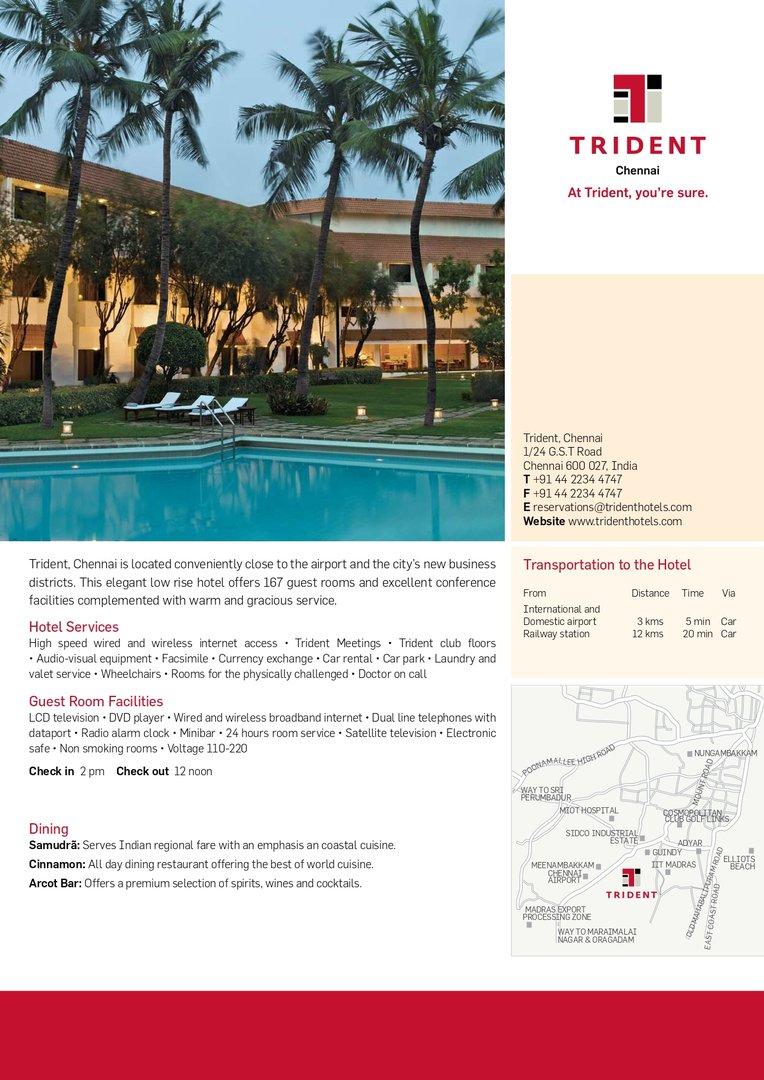
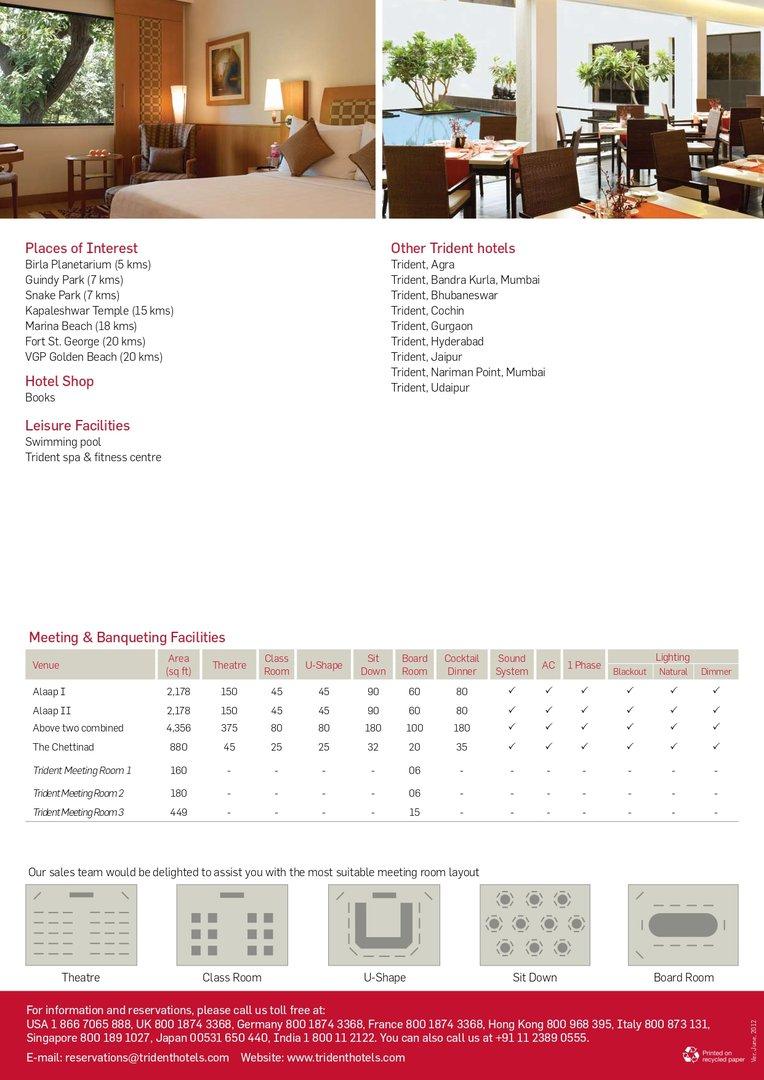
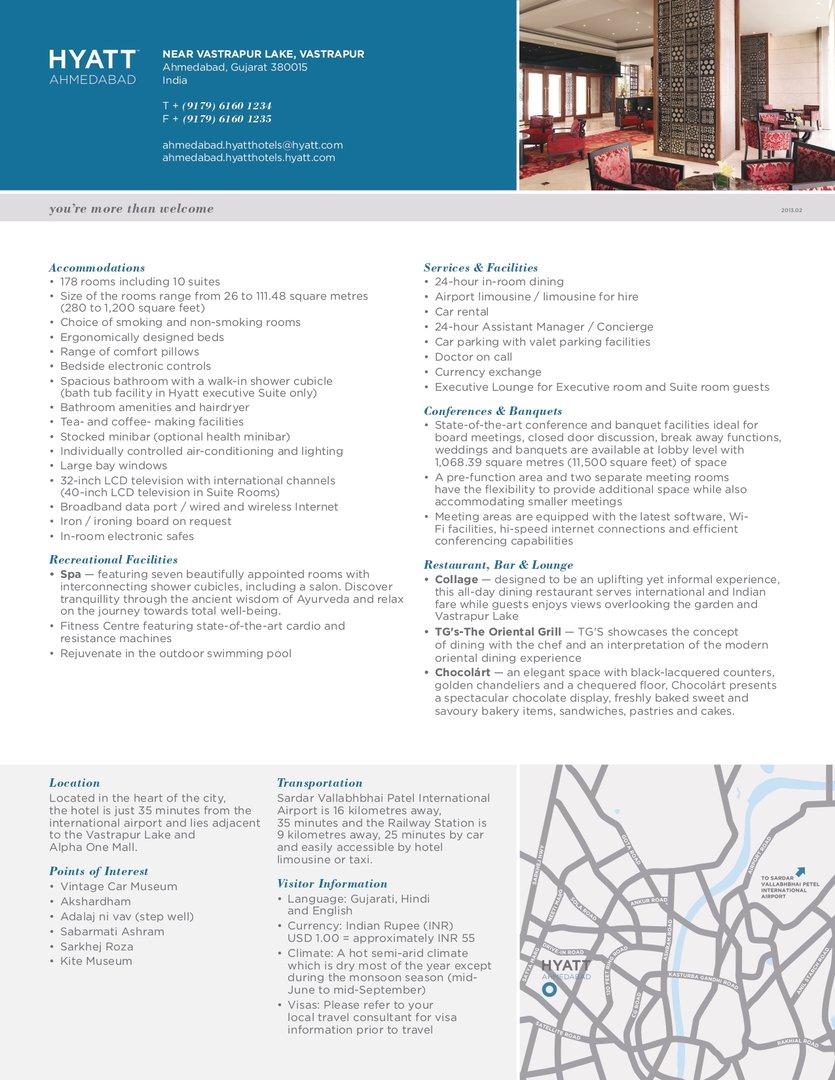
A hotel fact sheet is a very crucial sales collateral, mostly undermined by independent hotels. Hotel fact sheets are used by event planners, group bookers, travel agents, and corporate bookers. This is one tool that gives the bookers all the factual information about the hotel in one shot before they need to make a decision or finalize a venue. If you do not have a fact sheet, the planners may not even bother to call your sales rep and check regarding your facilities or capacity.
The hotel fact sheet is a simple document that has information such as – property contact details, location, number, size and types of rooms, restaurants, meeting rooms and their capacity, facilities at the hotel, nearby attractions, and so on. You may have all these details on your website, but the bookers consider it a hectic task to navigate your website page by page to find each and every piece of information about the hotel. A hotel fact sheet is also a convenient way for the bookers to share hotel information with their clients or event attendees.
Things to consider for your hotel fact sheet
Design it! Don’t type it out on a word file
We noticed that even some of the popular hotel brands have published fact sheets that were typed in as a word document. Get a professional designer to design the fact sheet for you, do not make the mistake of making your sales collateral bland. Have branding elements on the page and make it look professional and suited for your brand. However, try not to make it too flashy and too colourful.
Two pages are best, three the most
Limit the document to two pages, consider the third page only if you cannot fit essential facts into two pages. Also, when it is two pages, this can be printed on two sides of a single paper, it becomes odd when it is three and becomes difficult to manage when it is even more.
A cover page is not required
A beautifully designed cover page can be a part of your brochure but not required for your fact sheet. This page will only make the document heavier.
Stick to the facts, flowery language does not work
The purpose of a fact sheet is to convey facts and skim through the facts in a few seconds. Nobody is going to read long sentences when they are looking for facts or your story. And so, don’t waste your money paying a copywriter or your time crafting the perfect sentence for each of your facilities.
Readability, Readability, Readability!
Use readable font size and colour. Most hotels try to cramp a lot of unnecessary information and long sentences into the fact sheet. To do this within two pages, they go on reducing the font size and ultimately making it difficult to read. Do not make this mistake. Include only relevant information and use readable font size.
Do not bombard with photographs
Photographs of each facility, room type, meeting room are not required. At the point where someone requires your fact sheet, they would have already known your hotel or have seen the images of your hotel or trust that the rooms are going to be good. Including photographs of every room type or facility is only going to cramp your hotel fact sheet. So add only necessary photographs and that too if you have ample space in the fact sheet. A detailed beautifully designed brochure with a cover page, images of the room, stories can always be a separate document.
Size of the PDF document matters
Make sure that the file size of your hotel fact sheet’s PDF copy is not more than 2 to 3 MB. When you include more images into the fact sheet, it becomes heavy and makes it difficult to share over WhatsApp, email, or any other means.
Download link in email signatures
Rather than attaching the fact sheet every time your reservation or sales employee sends out an email, have a link to download the document in their signature.
Download link on hotel website
Make a PDF copy of your fact sheet available to download on your hotel’s website. A new potential booker mostly lands on your website to check the details of your hotel. If a fact sheet is readily available to him/her, it makes their life so much easier.
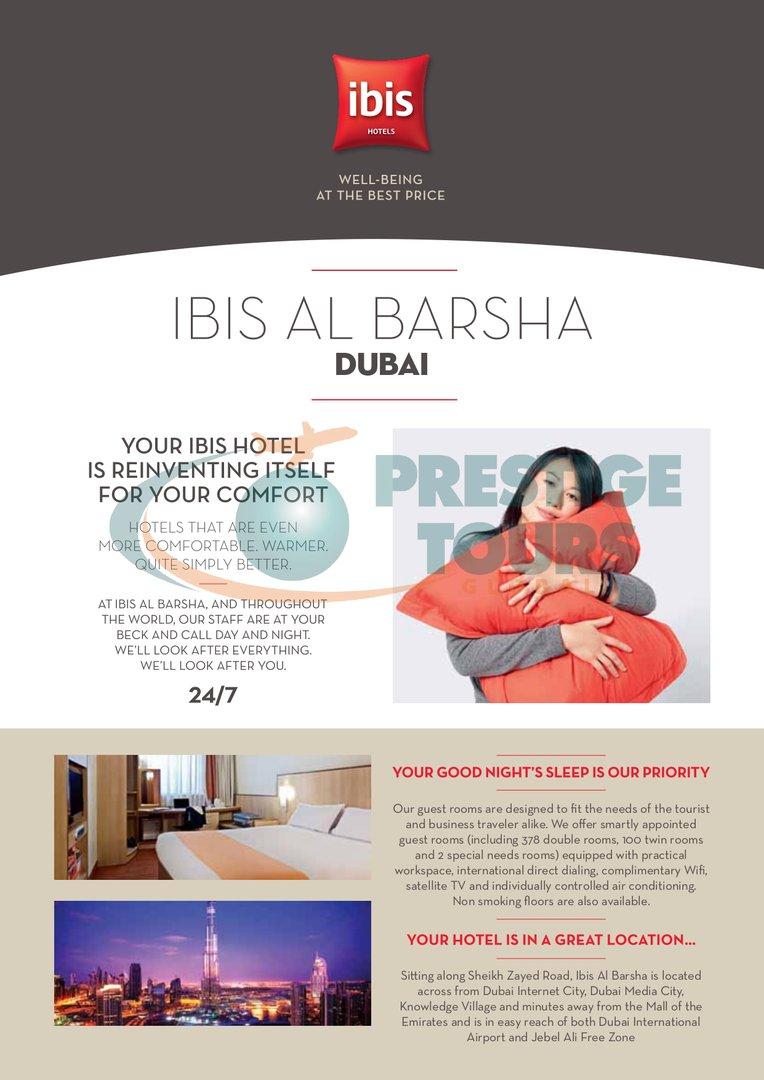
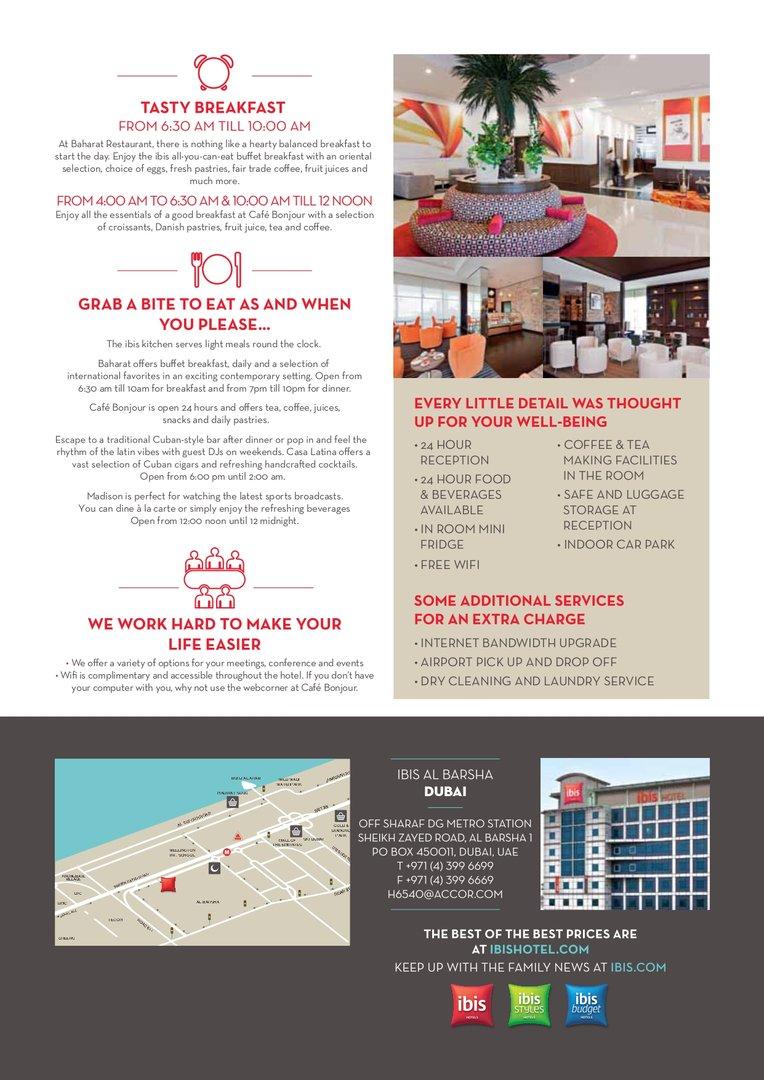
Hotel fact sheet samples – the ones we loved the most
We evaluated hundreds of hotel fact sheets before writing this article, and these three are the ones we loved the most.
I was doing some research on companies that offered all-in-one marketing automation systems when it occurred to me that the hotel sector continues to underestimate the power of marketing automation. Certainly, the chains make extensive use of it, but what about medium-sized hotels and independent chains? Because the hospitality sector is so operationally intense, General Managers and owners rarely have time to worry about anything else.
Marketing automation is a method of automating repetitive marketing tasks using technology. Marketing teams may automate time-consuming processes like email marketing, social media posting, and even ad campaigns, not just to save time but also to deliver a more personalized experience for clients.
Executing marketing automation requires some degree of technical expertise. So if you are in one of those senior roles, I advise that you get creative and develop strategies, additionally hire someone or an agency to execute it for you. This article will give you an overview of what tools and some ideas around these tools, to help you strategize a better marketing plan. However, marketing automation has a learning curve that you have to commit to and also involves rigorous trial and error before it actually starts generating positive ROI. So give it some time.
Hotel Customer Journey Map
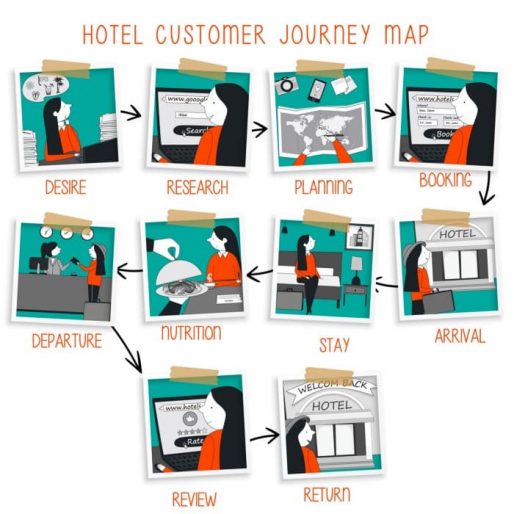
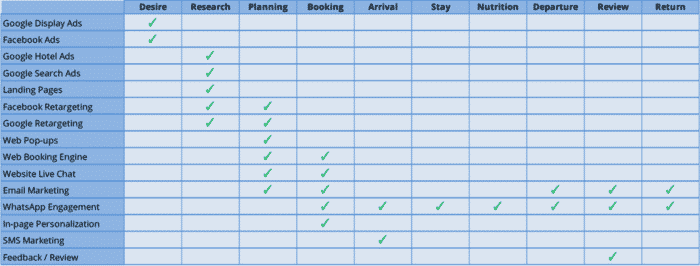
Understanding the customer journey map (CJM) of the target client persona is critical before beginning any marketing effort. Marketing actions are aimed at customers based on where they are on the journey map; otherwise, what you’re trying to say loses its context and relevance. CJM looks somewhat like this for a leisure traveler.
The above CJM is of a leisure traveler, it could be different for each segment or customer persona. In most industries, customer segmentation is done on the basis of either geographic, demographic or need and benefit. In hospitality, generally, customer segmentation is done on the basis of purchase occasion or reasons behind the travel, like — Transient, Leisure, Corporate and so on.
Charting out CJM for each customer persona and designing a hotel marketing plan around each persona will give a tremendous boost to your topline. The primary reason of planning campaigns using CJM is to plan marketing campaigns and activities at each stage so that it encourages a potential customer to take action and move on to the next stage in the journey map, ultimately resulting in a purchase.
Let us discuss the different stages of the CJM before we dive into the channels.
Desire Stage
This is the stage where the potential customer either has a desire to go on a vacation or that desire has not even started in his mind. This is where the targeting journey starts.
But how do you target a potential customer, who has never stayed at your hotel, has had no interaction with your hotel, does not even know your hotel exists, all he has is just a thought to go on a holiday or sometimes not even that. How to do it is explained in Google Display Ads and Facebook Ads section under Marketing Channels.
The hotel’s marketing campaigns at this stage should be focused on igniting that vacation desire and push the customer to further research about a vacation. Here are some examples of content ideas.
Content Ideas for Igniting Vacation Ideas
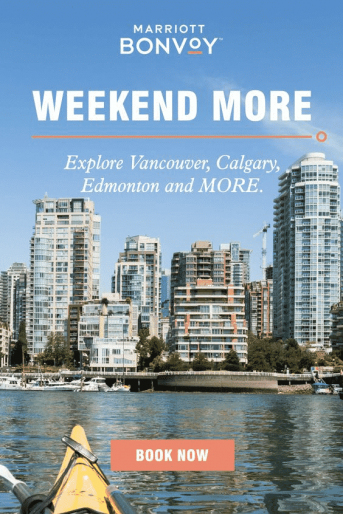
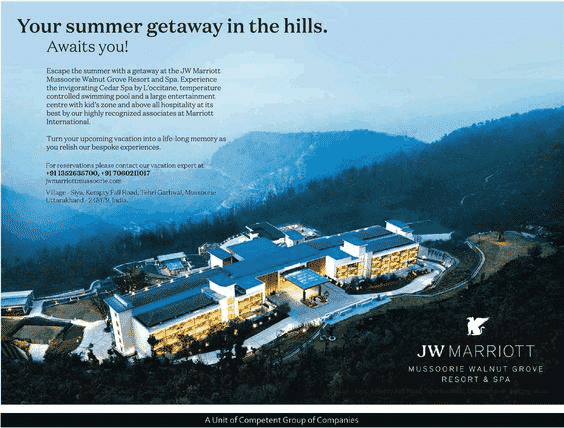
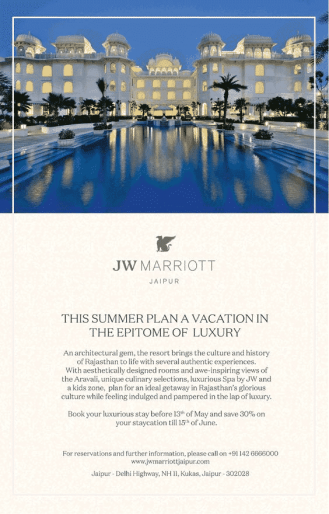
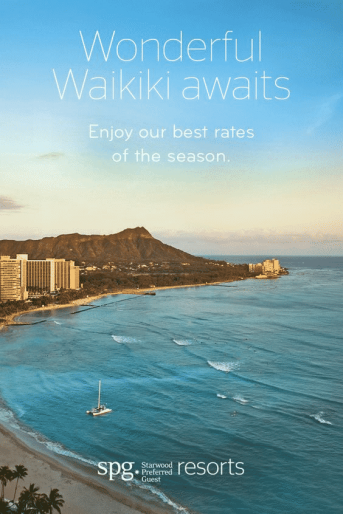
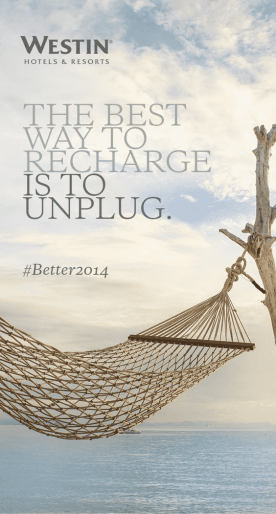
If you observe the content on these ads, you’ll notice that very little about the hotel is mentioned. Rather focus is on the “taking a vacation” and “destination”. You can also notice the emphasis is on keywords like “weekend”, “summer”, “unplug”, “vacation”, “getaway” and so on.
Imagine if you have a resort in Goa and a potential customer from Bengaluru has seen your ad multiple times over the week with the title “Unwind in Goa this Weekend”. Back in his mind, his desire to be in Goa this weekend is being built. Now what you need to do is to cement that desire and give the customer inspiration in your brand.
Google Display Ads and Facebook Ads are the two main channels you can leverage at this stage.
Research Stage
Every brand, every website out there is trying to capture customers’ attention at this stage and hence this is the most difficult stage for execution. This is the stage where the potential guest starts their research on destinations, flight fares, hotels, and everything else. At this stage, customers start doing google searches like these.
“hotels in goa”
“bangalore to goa flights”
“sightseeing in goa”
“best places in goa”
“best restaurants in goa”
“things to see in goa”
“budget hotels in goa”
“best outdoor activities in goa”
Now is the time when search engine marketing (SEM) and search engine optimization (SEO) strategies should kick in. A common SEO/SEM approach will not work here and hence this is where you need to be really creative. The first results page for the above search is a real battle place for those big brands. Even the major hospitality chains like Marriott, IHG, and Accor find it difficult to find a position on the first page. The first page is mostly taken over by OTAs — Booking.com, MakeMyTrip, Expedia, Trivago, and other players. Being a battleground doesn’t mean that you have to back out, rather be creative.
A mix of organic and paid marketing is your chance to a higher visibility and customer attention at this stage. Here are some hotel marketing tips to get you noticed in the research stage:
Regularly sponsor a popular vlogger in your destination.
Apart from your regular youtube content, try to post at least 1 video related to your destination, every month.
Your goal at this stage should be to bring the customer to your website and capture their details and consent for further marketing:
Capture opt-in for web push notifications. Web Push Notifications are explained later down in this article.
Capture email ID using a Web Pop-up, Chat or even through your booking engine.
By end of the research stage, the customer would have made up his mind on things like where to stay, which time of the year, with who he is traveling, and so on.
Planning Stage
The planning stage is the stage where the customer is deciding on things like which hotel, how to go, how much to spend, exact travel dates, which room, how to commute, etc.. This is the stage the customer will have tons of questions and doubts.
The two objectives you need to focus at this stage are:
Helping the customers with information and clarifying doubts. This will create a bond between your brand and the customer.
Communicate the benefits of booking directly with the hotel.
This is the stage where your blog articles, your website chat, email, and telephone support should help the customer and build his confidence. The highest level of engagement that can be expected is chat, call or email. If you have received either a chat, call or email, you stand a higher chance of the customer booking your hotel. You can call these customers as high-intent customers.
At this stage, all your focus should be on building enough confidence and convincing the customer to book directly.
Booking Stage
The customer is all set to make a booking. Now the most pressing question is, which channel will the customer use to make the booking — OTA, Offline Agent, or Direct? This is a very crucial stage because if your customer goes ahead with an OTA booking, it could easily shave 25% off your nightly rate as commissions, and the offline agent route could even be more expensive.
This is not new information for hoteliers, I am just overemphasizing it — Have a compelling offer for customers to book directly rather than on OTA or agent route. Without this, all your hotel’s marketing efforts could run into the drain. Every hotel these days have a direct booking offer, and chains will have a loyalty program as well. So make your offer more compelling than what competitors are offering.
A few key things for this stage are:
You need to have a web booking engine on your website. Choose a web booking engine that can manage the offers and freebies you are offering your customer.
Have an offers page on your website which is updated with latest book direct offers. This page URL can be used by your agents to send to your customers during a chat or email conversation.
Establish automations for timely transactional emails and notifications. Don’t make your guests call up the hotel repeatedly for booking confirmations.
Arrival Stage
Soon after the guest books your hotel, there is a small window between the booking and the actual arrival, it could be a day, a week, a month, or even months. Based on the booking window there are numerous creative things you can do to increase the excitement level of the customer, as well as upsell and cross-sell your services. Following are some ideas you can consider.
Send them links to your most popular blog articles about the destination.
Send them a list of activities they could do in your hotel.
If you have a web-check-in facility, send them a link to it, few days before arrival.
Ask them for WhatsApp messaging opt-in.
Ask them to pre book their meals or spa services.
Offer them a discounted upgrade.
Stay and Nutrition Stage
Stay Stage and Nutrition Stage are the two stages where your guests are actually utilizing your services and are continuously evaluating how good or bad your services are.
Three things to focus on at this stage:
Handling service requests.
Seek continuous feedback from the guest.
Cross sell your restaurant, spa and other services.
Some hotels have their own white-labeled apps, I really doubt how much guests value these apps or take the effort to download them. To me, WhatsApp is the best medium to leverage during this stage.
Departure Stage
The guest is preparing to return home and is in the process of check-in out from your hotel. Relevant things to engage customers at this stage are:
Stay details and invoice in email for future reference.
A thank you email from the General Manager.
Your hotel marketing should not end here. This is where the marketing funnel starts again! From this point, your guest should be put into a “Past Guests” bucket where they should be triggered for a longer marketing journey to return to your hotel for another stay.
Review Stage
Once the guest has reached back home is the time for you to ask for a review. You may ask the guest to post a review on Social Media, Google, or TripAdvisor; whatever channel you believe your future guests are seeking reviews about your hotel. You can offer your guests a special discount or package for their next trip if they complete the review.
Return Stage
Because the probability of a guest returning is much lower when compared to other industries, hotels tend to completely abandon their past guests. This is very wrong decision hoteliers take. Most hotels literally have no strategy to engage with past guests. This is because they do not fully understand the benefit of repeat customers. Here are reasons why you should start focusing your past guests:
You can service them better — you already know their likes and dislikes, you have a chance of servicing them better, resulting in a better guest satisfaction. The guests also feel more comfortable during their repeat stays because they get familiar with your employees and the hotel itself. The guests starts to develop an emotional bonding with the hotel.
Word of mouth (WOM) — the most powerful forms of marketing. It is very difficult to activate WOM otherwise, but when the guest is emotionally attached to your hotel, they spread the word to their friends, family and even social media. Researches say 92% of consumers trust their friends over traditional media.
No to worry about OTAs hijacking your guests — when you start to have more of repeat guests, you bottom line improves, because repeat guests always book with you directly. It takes time to even have 1% of your occupancy filled with repeat guests. If you have a proper past guest engagement strategy in place, you can have even 10% or more of repeat guests or at least referrer guests who come direct through WOM.
Repeat guests spend more — Customers who are repeat customers are more inclined to upgrade and purchase more expensive products or services. It all comes down to building trust. Eating at the hotel restaurant, feeling confident about the standard of food offered via room service, and using any other hotel facilities will build trust, which will lead to a higher level of revenue.
New customers are expensive — Imagine the money tap you have kept open to attract new customers and the strategies you build to divert OTA booking to direct. These expenses are not incurred on past guests. Attracting new customers costs five times more than keeping an existing customer. This is largely due to advances in technology and the associated costs and the increasing cost of marketing, including cuts given to online booking sites.
Upselling is easier with repeat customers — Loyal guests spend more money, usually because they are more familiar with what is on offer at a hotel they have visited before. In addition, loyal guests often stay longer. Even tips to hotel staff by repeat guests tend to increase. The trust repeat customers have in a particular hotel makes it easier to persuade them to buy into upsells than customers who are completely new.
Hotel Marketing Channels
There are numerous channels you can use to communicate with your customers. I have explained a few popular ones which are widely used and are essential in your marketing automation. Whatever channels you use, consider if the channel is preferred by your customer to receive marketing communications. For example, someone who checked your website does not expect to receive an automated call with a pre-recorded message with offers. Insurance companies and financial institutions do that, Not Hospitality! The moment you do this, consider you’ve lost that customer. Please do not bombard messages on your customers.
Google Display Ads and Facebook Ads
Google Display Ads and Facebook Ads can be used to generate desire and can be continued through Research and Planning stages. However, the ads that are displayed at each stage should focus on what the user needs during the customer journey. A standard ad throughout these stages will be a waste of money.
Desire Stage — Ads that inspire the customer to take a vacation.
Research Stage — Promote peculiar feature or a package your hotel offers.
Planning Stage — Promote direct booking benefits and offers.
How to plan your display ad campaigns for the desire stage?
Rember, the potential customer either have no intention of taking a vacation or only have thought of it. How can we target these customers?
Leverage historical data from PMS
The PMS stores all guest data including, age, city, country, booking date, check-in, and check-out dates, and so on. Export these data and arrive at weekly aggregate data of the following:
City & country wise contribution
Average Booking Window
Age groups of your guests
Optionally, to make your data more reliable, compare this data with dates of historical events to see if the demand was generated by a one-off events in the past. For example, if there had been a doctor’s conference happening in the city, there would have been a surge in your bookings. But this doctor’s conference is not expected to take place in the same city every year, and hence this one-off event. The forecasts during this period should be normalized.
You could also compare the trends with school holidays and seasons in respective countries, you’ll definitely find correlations.
Now Google Display Ads and Facebook ads should be configured to target geographies and age groups for a period around the booking window. For example, if your top country for the last week of December is Australia and the average booking window is 8 weeks, the ad configuration should be as follows:
Target Geography: Australia
Age Group: 35–45 years
Start Date: October 25th
End Date: November 30th
Additionally, you can specify the interests and specific demographics of the target customer.
Facebook allows advertisers to hone in on users based on a variety of other demographic parameters, including education, financial, life events, parents, politics, relationships, work, and more.
Several of these demographic categories can be beneficial for hotels. For example, the “parents” category can be great for properties that are family-friendly and can allow you to promote specific amenities that are attractive to certain age groups; babies might love the splash pool while teens will love your waterslides. The “financial” category can help hotels reach personas based on income or net worth. Are you a budget-friendly property? Hone in on users with a lower income (ex: $25,000 — $50,000). Are you a high-end property? Target users with a larger income (ex: $100,000+). Are you a romantic property? Target users by their anniversary or who are “recently engaged”. The options are only limited by your creativity!
Interest-based targeting allows advertisers to hone in on platform users with specific interests. Selecting Travel, of course, can help hotels better define the traveler profile. Options here include important location-based travel elements, like “beaches” or “mountains”, and generic categories, like “vacations” or “adventure travel”. Does your hotel offer a unique emphasis on health and wellness? If so, interest categories like “yoga”, “running” and “meditation” might be highly relevant. Do your property offer eclectic or exciting on-site dining or beverage options? If so, specific food and beverage targeting can help you reach hip, happening foodies. Just like demographic targeting, interest targeting is only limited by your imagination.
You might need to create as many ad campaigns or ad groups based on the Weekly-Geography mix, because travel patterns change region to region and you have 52 weeks to manage, hence always better to automate and schedule it.
Google Hotel Ads
You are already aware of the Google Hotel Ads or your hotel is already listed here through one of the OTA feeds. Google Hotel Ads is a meta-search service offered by Google that displays hotels in a locality. It also offers direct booking features and many advanced display ad options.
Attract travelers who are actively looking for a hotel in a particular area. Hotel ads contain your company’s name, hotel name, price, and text callouts to highlight the unique benefits of booking through your site.
Tailor a hotel’s prices by a hotel’s availability and traveler itineraries.
Send customers to a website to book, or allow them to book on Google.
Pay for an ad only when someone books a hotel. Or fine-tune your bidding by factors such as device type, the traveler’s country, or length of stay
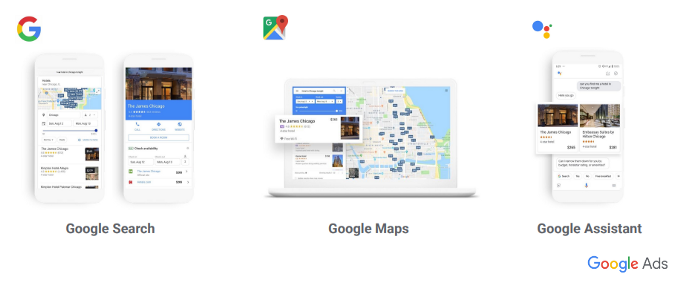
Hotel ads are displayed in the following formats.
If only the OTA feed is connected to Google Hotel Ads, then there are high chances that your bookings are converted by OTAs. You need to connect Google Hotel Ads to your web booking engine from where daily rates are fetched by Google. This will enable direct bookings to your website.
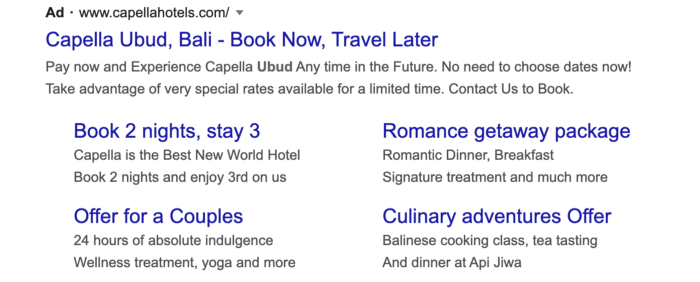
Search ads are those text ads that get listed on top of the Google search results pages.
It is difficult to get to this position because OTAs and chains would be bidding extremely high for these positions, which might turn out to be really expensive for your brand. These are some safe spots where you should run your Google Search Ads.
Target your brand keywords and hotel name, so that OTAs do not brandjack your name.
Target hyperlocal, instead of targeting “hotels in goa”, try to target “hotels in margoa” or for long tail keywords try things like — “hotels in goa with private pool”.
Web Push Notifications
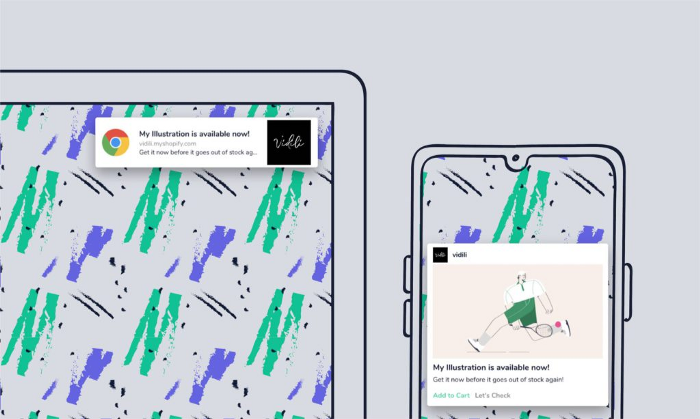
Nothing new here, we all have come across Web Push Notifications on our browsers and mobiles.
Honestly, these push notifications have become really annoying for some users, who ignorantly accept notifications when they visit a site. It then becomes a real mess. The above article explains some interesting gimmicks brands do to deceive the user and accept push notifications. I’d suggest staying away from those gimmicks and being true to your customers.
So, in this world of spammy marketing campaigns, the only way to succeed is to not become so PUSHY and stay relevant to your user. If you can’t find any relevance, DON’T SPAM the people who love your brand. Secondly, just because you have an additional channel at your disposal, don’t send out the same content to all the channels. Here are some ideas to utilize push notifications in your marketing and yet stay relevant.
Upsell and Cross Sell — once a user completes a booking, you can utilize push notifications to nudge users to take action on booking upgrades or booking additional services like Spa.
Content marketing — if your hotel has a content marketing strategy that promotes local sightseeing and activities, you could push these content to the guest to visit your hotel’s blog.
Re-engagement — you can considering re-engagement messages to guests after a period of 6 months or 1 year to take action to visit you again, add a discount to motivate them.
Web Pop-ups
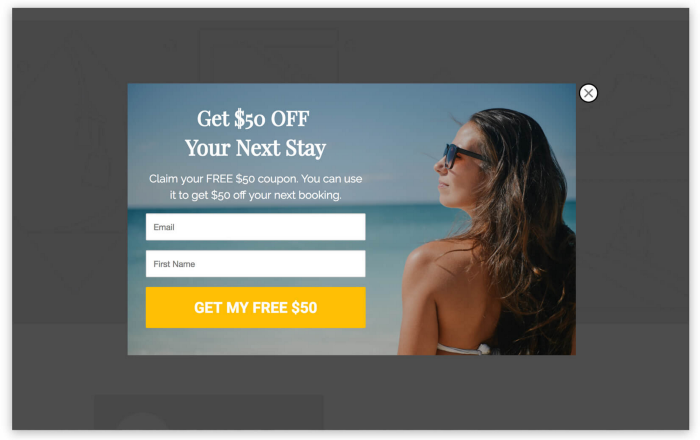
Web pop-ups are small window that appears within your website. Just like this one.
Use these to capture customers’ email ID in exchange for a discount code, an offer, or even for destination-related articles. This can be used in the Desire, Research, or Planning stages. The email IDs captured can be used for further email campaigns.
Website Live Chat
The Most Powerful Lead Generation Tool
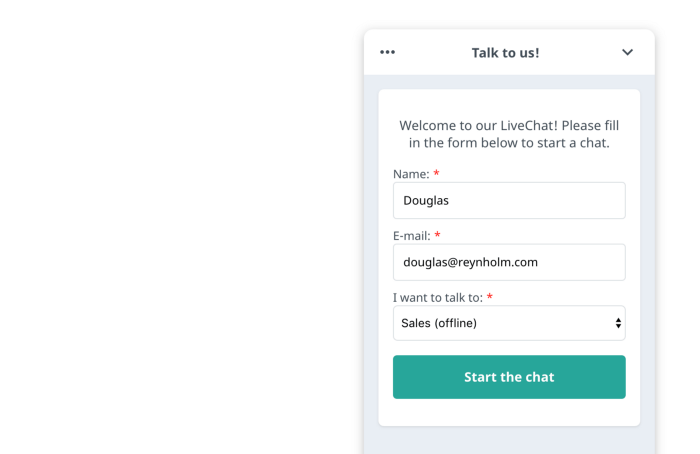
When a customer visits your site and wants to clarify something — maybe your check-in and check-out time or what types of cards are accepted, they often look for a phone number or a chat option to talk to live agents. If you have a live chat installed on your website, it can capture the name and email ID of the visitor using a pre-chat form.
Website live chat is the most powerful lead generation tool. Because — visitors who enter your chat are people in need of the service and are in the consideration stage of the marketing funnel, ie. they are considering booking a room or an event. This is no random lead, they are on your chat seeking more information, you should never let go of them.
Booking Engine
Like the website live chat, Web Booking Engine (WBE) is also a source of capturing high intent leads. But for some reason, most booking engine providers do offer to capture these leads.
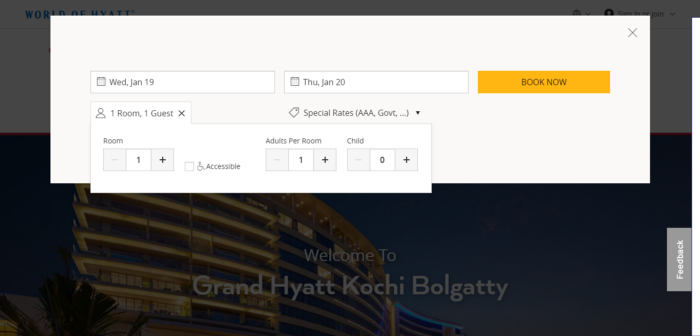
Here is a screenshot of Grand Hyatt’s WBE.
The bookings engine only captures Check-in Date, Check-out Date, No. of guests, and no. of rooms. Why on earth are the booking engines not capturing the name and email address of the visitor? Are they trying to reduce the user interactions? The name and email ID need not be captured at every search, it only needs to be done once. Are they afraid, that the user will not check prices if they ask for a name and email ID? Am I missing something here?
What I think is that someone with high intent does not matter sharing their name and email ID. It is a really good way to filter out spammers and rate shoppers. Also, it could help you get creative with In-page Personalizations which your customers would feel more connected to.
However, if your booking engine supports capturing user email IDs and also gives you access to the specific user’s search dates and other interactions, you can get really creative with in-page personalizations and abandoned booking emails (Google for abandoned cart reminders to learn how it is used by e-commerce companies).
Google and Facebook Remarketing
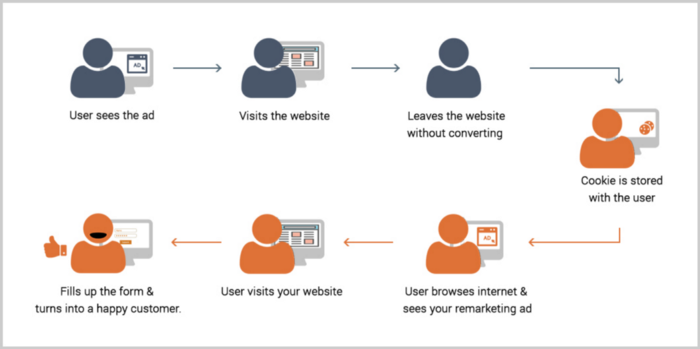
Retargeting or remarketing is the process of finding people who’ve visited your website and then using this data to serve them ads on Facebook and Google Display Ads. You can then run advertising campaigns to target those people and convince them to come back to your website and make a reservation.
Now retargeting all visitors who come on your website could be a huge waste of money. You can configure on Facebook Ads Manager to who to serve your ads to — known as Custom Audience. My recommendations for retargeting are:
Rooms
Top 25% of visitors who have spent the most time on your website in the past 14 days.
Visitors who have visited your web booking page in the past 14 days.
Configure ads manager to exclude visitors who have completed the booking. Your booking confirmation page URL can be used to exclude these visitors.
Events & Conferences
Top 25% of visitors in the past 60 days who have visited your Events or Meetings page.
Do not exclude visitors, because once they have contacted the hotel it may take weeks for a client to finalise the venue. So in the meantime, repeated ads will help to keep your brand or venue in the forefront of customer’s mind.
A marketing automation platform is not really necessary to use basic Facebook Retargeting, you can simply install the Facebook Pixel on your website and start managing the ads yourself. Installing the Facebook Pixel will need some technical knowledge, but everything else is fairly simple.
Email Marketing
I hate marketing emails. It floods the inbox and makes you miss more important emails. I am guessing everyone feels the same about email marketing campaigns. This is why you need to keep your email marketing campaigns more relevant to the user than any other channel. You need to have proper control over the frequency and content, otherwise, your users will start hating your brand. So here is a list of emails that I think hotels could use for engagement.
Booking confirmation — an email containing the booking details like reservation number, room details, total amount paid and so on. Most hotels use this. Even if they do not have an automated or fully integrated system, a reservation agent sends this confirmation email to guests.
Pre-arrival — an email a few days before the guest is expected to arrive. The email could contain a small welcome note from the general manager, places to visit around the hotel, few details about what the guests can do within the hotel — spa, swimming pool or restaurants. If you have a web check-in system, you can also ask the guest to do a web checkin for smooth check-in at the time of arrival.
Departure — as soon as the guests checks-out, an email consisting of all the charges and a copy of the invoice could be sent to the guest so that the guest have it safely stored in their inbox and can retrieve it whenever they want.
Thank you and feedback email — as soon or within 3 days of departure, a thank you note from the general manager. you could also ask your guests to review your hotel on tripadvisor or google. Or you can have an NPS form link attached within the email. You could also offer a 10% discount on their next stay if they complete your feedback form or post a review on tripadvisor.
Feedback reminder email — if you did not receive a feedback or response on your NPS form, you could send one more email to your guest reminding him for the feedback and the discount awaiting them.
Advanced birthday and anniversary wishes — 45 or 60 days prior to anniversary or birthday of guests who have stayed with you, you could send them a deep discount or freebies which they could utilise on any day of their birthday/anniversary month. 15 days prior to the birthday/anniversary date, you could send out another email to remind them to utilise their offer.
PS: Keep in mind that there is a risky element while wishing anniversary — it is not necessary that the couple is together when they receive your email :D.
Birthday and anniversary wishes — you could automate birthday wishes to your guests.
New property openings — keep your customers updated about new property openings under your brand, so that they can consider it for their next holiday. Offer them a special discount for at this new location.
Additionally, these are the emails, I’d recommend being sent to your corporate and agent bookers.
Birthday and anniversary wishes — follow the same strategy you follow for your guests. If you want, you could pump up the discount or offer a free room to your bookers on their special day or a spa treatment. Because, not all bookers can afford your hotel even after a deep discount, same time bookers are critical for your business. This a way you can pamper them.
Restaurant & Spa Promotions — hotels frequently host food festivals, it is more relevant to send these promotions to your bookers rather than sending it to your entire guest list. Your guests are most probably not from your same city and hence makes no relevance to them.
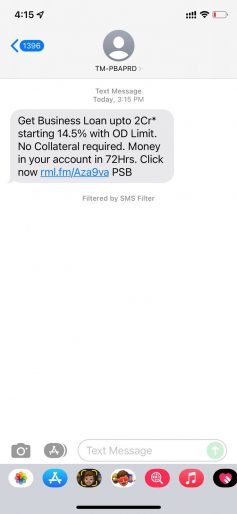
SMS Marketing
Just like emails, people get bombarded with an overwhelming amount of text messages. It’s important that your business doesn’t add to that stress by sending too many texts. If you don’t have anything important to say or offer, it’s best not to send a text at all. By sending out only your most exciting texts, you’ll avoid annoying customers. Plus, when they do see that they’ve gotten a text from you, they’ll know it’s something good.
Before you plan on starting SMS campaigns, please make a note of this. India, In an effort to control promotional spam, SMS fraud, and unsolicited messaging, the TRAI has enforced new guidelines for SMS marketing. It mandates the whitelisting of all SMS templates and registration of your company’s entities, Sender IDs (Headers), and user consent in a centralized DLT portal provided by Indian mobile operators.
Use SMS for Hyperlocal Marketing
For hotels, SMS is not a channel that works well with your guest’s list, however, it is quite effective for hyperlocal marketing to promote your staycation offers, food festivals, spa or gym packages. But refrain from overdoing it.
Building your hyperlocal list
Employees — Who else can better promote your business than your employees? When you’re running a hotel with 100 or 200 employees, it is possible that all the employees aren’t aware of your promotions. Secondly, employees mostly live close to your hotel and hence their network is also local, it is more easier to spread word of mouth hyperlocal through employees.
Feedback Forms — You must be already having manual or digital ways of capturing feedbacks from your walk-in restaurant guests and spa customers. Look for people who are local in those feedback forms and build a list.
Public Relations — Every hotel have someone taking care of public relations and statutory liasoning with tax offices, police station, municipality, health department, press and so on. Get a list of all the people they work with. The list might not be more than 20 or 30, but these people are well networked and they already know your brand. They wouldn’t mind knowing more about your business.
Corporate Bookers — Ask the sales department for their database of corporate bookers and agents. This list can be anywhere between 1000 to 5000.
Do’s and Don’ts
Don’t buy or subscribe to databases of people who have never interacted with your brand. This is third-class marketing. People will start hating your brand.
Always have a provision for recipients to opt out from your text message campaigns. Reminding users that they can opt-out at any time will help you avoid annoying them and it will also ensure that your SMS marketing list is filled with people that are actually interested in getting your messages.
Do not forget to mention your brand! Even if your brand is small or big, people trust brands, because when a company is trying to build a brand, it is trying to build a personality of the brand and hence people are more inclined to trust brands.
Here are two screenshots from text message marketing I recently received.
The first one is a random promo message. I do not know from which company it is, there is no option to unsubscribe it and lastly, I am definitely not their customer.
The second one is obviously from Etisalat, I am definitely their customer, they have properly detailed on how to unsubscribe from it.
Which do you think has a higher probability of conversion?
WhatsApp Engagement
As of March 2020, WhatsApp had two billion monthly active users, up from over 1 billion MAU in February 2016. The service is one of the most popular mobile messaging apps worldwide. Every day, at least 60 billion messages are sent via this messaging app.
So will WhatsApp soon replace SMS marketing? Not exactly! You may have observed, even after so much user adoption of WhatsApp, you receive so few marketing messages through WhatsApp than through SMS. Even if you receive marketing messages, it is highly unlikely that you received it from a reputed brand or company. This is because Meta does not want WhatsApp to be another broadcasting channel, rather it wants brands to use WhatsApp as a customer engagement tool or a customer service channel, and hence they have built restrictions on what can be sent to customers. This is controlled through the following policies:
User Opt-ins — brands are not allowed to send messages to WhatsApp user without their consent. You can get this consent through various other channels — SMS, Email, QR Codes, Push notifications and so on.
Whitelisting Message Templates — Now if you have the consent of the user, you can initiate a conversation with the user using a pre-defined message template. But this is limited to the first message only, and to continue conversation, the user has the initiate by responding to the message. The template could contain variables such as — name, reservation number, amount etc.. But the format/template of your messages should be submitted to and approved by Meta through a WhatsApp Service Provider (WSP).
A WhatsApp message template could look like this:
“Hi, name. “Thank you for choosing us. We would like to confirm your reservation at hotel name between arrival date and departure date. For more details on your booking and hotel, please visit the URL. We hope you will enjoy your stay and we look forward to welcoming you !”
24 Hour Window — Once the user responds to your above message, then you are open to chat freely, but only for providing support or assistance to the customer. Again, this is restricted to 24 hours. To continue the conversation, either the user has to initiate the conversation again.
Yes, it is a little complicated and is not easy as opening your WhatsApp and texting your user.
How can your hotel utilize WhatsApp for a better guest experience?
Sending out notifications and standard messages — Here are a list of message templates you could use to engage with your guests at different stages of their stay:
Pre-stay — “Hi, Jennifer. “Thank you for choosing us. We would like to confirm your reservation at hotel name between arrival date and departure date. For more details on your booking and hotel, please visit the URL. We hope you will enjoy your stay and we look forward to welcoming you !”
Check-in — “Hi, Jennifer. Welcome to hotel name. Your WiFi is HappyGuest. Here is a personalized welcome page that has all the relevant details about your stay, right from the shuttle to nearby recommendations Please visit the URL Breakfast is served from 6:30 to 9:30 AM. We also have Happy Hours for our guests every day from 5pm-10pm. Feel free to text us here if you have any questions. Enjoy your stay”
During the stay — “Hi, Jennifer. We hope that you are doing well. How is your stay so far? Please let us know if we can assist with anything during your stay. Take care”
Check-out — “Hi, Jennifer. Thank you for choosing to stay with us. We hope you had a wonderful stay. We’d really appreciate if you just take a moment to share your experience with us:* the link.* We look forward to the pleasure of hosting you again. Safe travels— {Name}, General Manager”
Opt-in links in your transactional emails — we earlier discussed a series of transactional email from pre-stay to post-stay feedback. Try to include the open-in link in every email. Tell your customers that they could conveniently WhatsApp them for anything and everything even for room service during their stay.
SMS Opt-in link at the time of check-in — As soon as the customer is checked-in, let the system send your guest a welcome with an opt-in link. Also, ask your front desk to intimate your guests upon check-in that your hotel has a WhatsApp customer service, where all the services are available over WhatsApp.
QR Codes everywhere — put up QR codes that leads to opt-in URL everywhere — in the rooms, inside the elevator, on your keycard pouches, at your reception and everywhere you can think of. Here are some great examples of how hotels implement the QR opt-in system.
Examples of how hotels implement WhatsApp QR
Execute the Strategy in Reverse Chronology of CJM
When you are in a senior role, you have too many things to take care of and it becomes difficult to find time to strategize, execute and analyze a hotel marketing automation strategy. The easiest approach is to open one box at a time, ie., take one stage of the journey at a time and implement it. Also, my suggestion would be to implement it in the reverse order of the journey. If you are considering implementation in a forward direction, it does not always make sense to implement a stage without the next stage. For example, If you are done implementing automation for Research and Planning stage, these implementations do not make sense if you have no proper systems to capture direct booking. For this reason, reverse implementation is the best approach.
Here are the steps you need to take next to implement your hotel marketing automation.
Step 1: Identify a partner to help you execute marketing automation. If you’re tech savvy, you can rely on out-of-the-box platforms.
Step 2: Chart out your customer journey map.
Step 3: Plan what to communicate and which channel to use at each stages.
Step 4: Identify what KPI you will use at each stage to measure success of your strategy.
Step 5: Start implementation from the bottom of the customer journey map.
Step 6: Analyse the results of your strategy.
Step 7: Optimise your strategy to yield better results.
Here is how you can plan what channel to use at what stage. Not necessary to follow the same, you can create your own strategy. You can also use a detailed customer journey map template to plan your marketing.
Understanding Profitability
To analyse the profitability of acquiring customers through any paid channel, you need to understand the concepts of Customer Lifetime Value and Customer Acquisition Cost.
Customer Lifetime Value (CLV) — is a measure of the total income a business can expect to bring in from a typical customer for as long as that customer remains your customer.
For example, A couple in the US decides to travel to India for holidays this year. They book a room at your hotel for 5 nights and your room costs them $100 per night. So the total revenue you earn on this booking is 1 Room x 5 Nights x $100 which is equal to $500. Now, since this couple is from USA, and is travelling for holidays, then it is very unlikely that they are going to return to your hotel this year or even next year or ever. So here you CLV is $500.
In case if you are promoting a staycation or workation, then there are high chances that your customer would return the same year or next. In that case your CLV is higher than a foreign customer. If the customer returns another time, then your CLV is 1 Room x 5 Nights x $100 x 2 Visits, which is equal to $1000.
Let us also take an example of meetings and events. Let us consider that your tariff for hosting a wedding reception is $30 per guest. A couple hosts their wedding reception at your hotel with 100 guests. In this case your CLV is $3000.
I have taken the above examples for better understanding. Generally CLV is not calculated customer to customer, rather it is calculated as an aggregate, or you can even rough estimations for each of your customer segments.
CLV is not a standard metric in the hospitality industry and hence it is not necessary that you establish a system to calculate your CLVs, the above explanation is for you to have a calculation at the back of your head while deciding on where to spend your ad budgets.
Customer Acquisition Costs (CAC) — CAC is the cost of convincing a potential customer to buy a brand’s product or service, in the case of hotels — booking a hotel room or confirming an event at the hotel.
To calculate CAC, the marketer will need to divide all the costs spent acquiring customers against the number of new customers picked up. For example, if a hotel spends $500 on Facebook Ads yearly and receives 200 new customers, the CAC is $2.5.
Here is a working of how to calculate your contribution for booking received through OTA and through your website.
Measure the Results
Here are my suggestions on what KPIs to use to measure the success of your marketing efforts.
Desire — Click Through Rate (CTR)
Research — New Visitors to your website
Planning — Returning Visitors to your website
Booking — Revenue from Direct Bookings
Arrival — Revenue from Upsells & Cross Sells Prior to Arrival
Stay & Nutrition — No. of Service Requests Received
Departure — Additional Revenue Generated During the Stay
Review — CSAT/NPS or Review Ratings
Return — New vs. Return Guests
KPIs mentioned for Arrival and Departure might not be easily available through most PMS, you will have to do some workaround or find a relevant KPI for the same.
Additionally, the following KPIs should also be tracked regularly.
Online Marketing ROI
Customer Lifetime Value
Customer Acquisition Cost
Conclusion
There are hundreds of channels out there that can be used to engage customers at different stages of their customer journey, like — Apple Business Chat, Instagram, LinkedIn, Youtube, TikTok, Automated Calling Systems and even IoT can be utilized in marketing automation.
As a brand, your goal should never be to bombard messages on your customers to capture their attention but to improve conversions while staying relevant. Marketing automation is the right approach to deliver the most relevant messages to your guests with high levels of personalization. After all, hospitality is all about personalized service and utmost attention at all times.
I was doing some research on companies that offered all-in-one marketing automation systems when it occurred to me that the hotel sector continues to underestimate the power of marketing automation. Certainly, the chains make extensive use of it, but what about medium-sized hotels and independent chains? Because the hospitality sector is so operationally intense, General Managers and owners rarely have time to worry about anything else.
Marketing automation is a method of automating repetitive marketing tasks using technology. Marketing teams may automate time-consuming processes like email marketing, social media posting, and even ad campaigns, not just to save time but also to deliver a more personalized experience for clients.
Executing marketing automation requires some degree of technical expertise. So if you are in one of those senior roles, I advise that you get creative and develop strategies, additionally hire someone or an agency to execute it for you. This article will give you an overview of what tools and some ideas around these tools, to help you strategize a better marketing plan. However, marketing automation has a learning curve that you have to commit to and also involves rigorous trial and error before it actually starts generating positive ROI. So give it some time.
Hotel Customer Journey Map
Understanding the customer journey map (CJM) of the target client persona is critical before beginning any marketing effort. Marketing actions are aimed at customers based on where they are on the journey map; otherwise, what you’re trying to say loses its context and relevance. CJM looks somewhat like this for a leisure traveler.
The above CJM is of a leisure traveler, it could be different for each segment or customer persona. In most industries, customer segmentation is done on the basis of either geographic, demographic or need and benefit. In hospitality, generally, customer segmentation is done on the basis of purchase occasion or reasons behind the travel, like — Transient, Leisure, Corporate and so on.
Charting out CJM for each customer persona and designing a hotel marketing plan around each persona will give a tremendous boost to your topline. The primary reason of planning campaigns using CJM is to plan marketing campaigns and activities at each stage so that it encourages a potential customer to take action and move on to the next stage in the journey map, ultimately resulting in a purchase.
Let us discuss the different stages of the CJM before we dive into the channels.
Desire Stage
This is the stage where the potential customer either has a desire to go on a vacation or that desire has not even started in his mind. This is where the targeting journey starts.
But how do you target a potential customer, who has never stayed at your hotel, has had no interaction with your hotel, does not even know your hotel exists, all he has is just a thought to go on a holiday or sometimes not even that. How to do it is explained in Google Display Ads and Facebook Ads section under Marketing Channels.
The hotel’s marketing campaigns at this stage should be focused on igniting that vacation desire and push the customer to further research about a vacation. Here are some examples of content ideas.
Content Ideas for Igniting Vacation Ideas
If you observe the content on these ads, you’ll notice that very little about the hotel is mentioned. Rather focus is on the “taking a vacation” and “destination”. You can also notice the emphasis is on keywords like “weekend”, “summer”, “unplug”, “vacation”, “getaway” and so on.
Imagine if you have a resort in Goa and a potential customer from Bengaluru has seen your ad multiple times over the week with the title “Unwind in Goa this Weekend”. Back in his mind, his desire to be in Goa this weekend is being built. Now what you need to do is to cement that desire and give the customer inspiration in your brand.
Google Display Ads and Facebook Ads are the two main channels you can leverage at this stage.
Research Stage
Every brand, every website out there is trying to capture customers’ attention at this stage and hence this is the most difficult stage for execution. This is the stage where the potential guest starts their research on destinations, flight fares, hotels, and everything else. At this stage, customers start doing google searches like these.
“hotels in goa”
“bangalore to goa flights”
“sightseeing in goa”
“best places in goa”
“best restaurants in goa”
“things to see in goa”
“budget hotels in goa”
“best outdoor activities in goa”
Now is the time when search engine marketing (SEM) and search engine optimization (SEO) strategies should kick in. A common SEO/SEM approach will not work here and hence this is where you need to be really creative. The first results page for the above search is a real battle place for those big brands. Even the major hospitality chains like Marriott, IHG, and Accor find it difficult to find a position on the first page. The first page is mostly taken over by OTAs — Booking.com, MakeMyTrip, Expedia, Trivago, and other players. Being a battleground doesn’t mean that you have to back out, rather be creative.
A mix of organic and paid marketing is your chance to a higher visibility and customer attention at this stage. Here are some hotel marketing tips to get you noticed in the research stage:
Regularly sponsor a popular vlogger in your destination.
Apart from your regular youtube content, try to post at least 1 video related to your destination, every month.
Your goal at this stage should be to bring the customer to your website and capture their details and consent for further marketing:
Capture opt-in for web push notifications. Web Push Notifications are explained later down in this article.
Capture email ID using a Web Pop-up, Chat or even through your booking engine.
By end of the research stage, the customer would have made up his mind on things like where to stay, which time of the year, with who he is traveling, and so on.
Planning Stage
The planning stage is the stage where the customer is deciding on things like which hotel, how to go, how much to spend, exact travel dates, which room, how to commute, etc.. This is the stage the customer will have tons of questions and doubts.
The two objectives you need to focus at this stage are:
Helping the customers with information and clarifying doubts. This will create a bond between your brand and the customer.
Communicate the benefits of booking directly with the hotel.
This is the stage where your blog articles, your website chat, email, and telephone support should help the customer and build his confidence. The highest level of engagement that can be expected is chat, call or email. If you have received either a chat, call or email, you stand a higher chance of the customer booking your hotel. You can call these customers as high-intent customers.
At this stage, all your focus should be on building enough confidence and convincing the customer to book directly.
Booking Stage
The customer is all set to make a booking. Now the most pressing question is, which channel will the customer use to make the booking — OTA, Offline Agent, or Direct? This is a very crucial stage because if your customer goes ahead with an OTA booking, it could easily shave 25% off your nightly rate as commissions, and the offline agent route could even be more expensive.
This is not new information for hoteliers, I am just overemphasizing it — Have a compelling offer for customers to book directly rather than on OTA or agent route. Without this, all your hotel’s marketing efforts could run into the drain. Every hotel these days have a direct booking offer, and chains will have a loyalty program as well. So make your offer more compelling than what competitors are offering.
A few key things for this stage are:
You need to have a web booking engine on your website. Choose a web booking engine that can manage the offers and freebies you are offering your customer.
Have an offers page on your website which is updated with latest book direct offers. This page URL can be used by your agents to send to your customers during a chat or email conversation.
Establish automations for timely transactional emails and notifications. Don’t make your guests call up the hotel repeatedly for booking confirmations.
Arrival Stage
Soon after the guest books your hotel, there is a small window between the booking and the actual arrival, it could be a day, a week, a month, or even months. Based on the booking window there are numerous creative things you can do to increase the excitement level of the customer, as well as upsell and cross-sell your services. Following are some ideas you can consider.
Send them links to your most popular blog articles about the destination.
Send them a list of activities they could do in your hotel.
If you have a web-check-in facility, send them a link to it, few days before arrival.
Ask them for WhatsApp messaging opt-in.
Ask them to pre book their meals or spa services.
Offer them a discounted upgrade.
Stay and Nutrition Stage
Stay Stage and Nutrition Stage are the two stages where your guests are actually utilizing your services and are continuously evaluating how good or bad your services are.
Three things to focus on at this stage:
Handling service requests.
Seek continuous feedback from the guest.
Cross sell your restaurant, spa and other services.
Some hotels have their own white-labeled apps, I really doubt how much guests value these apps or take the effort to download them. To me, WhatsApp is the best medium to leverage during this stage.
Departure Stage
The guest is preparing to return home and is in the process of check-in out from your hotel. Relevant things to engage customers at this stage are:
Stay details and invoice in email for future reference.
A thank you email from the General Manager.
Your hotel marketing should not end here. This is where the marketing funnel starts again! From this point, your guest should be put into a “Past Guests” bucket where they should be triggered for a longer marketing journey to return to your hotel for another stay.
Review Stage
Once the guest has reached back home is the time for you to ask for a review. You may ask the guest to post a review on Social Media, Google, or TripAdvisor; whatever channel you believe your future guests are seeking reviews about your hotel. You can offer your guests a special discount or package for their next trip if they complete the review.
Return Stage
Because the probability of a guest returning is much lower when compared to other industries, hotels tend to completely abandon their past guests. This is very wrong decision hoteliers take. Most hotels literally have no strategy to engage with past guests. This is because they do not fully understand the benefit of repeat customers. Here are reasons why you should start focusing your past guests:
You can service them better — you already know their likes and dislikes, you have a chance of servicing them better, resulting in a better guest satisfaction. The guests also feel more comfortable during their repeat stays because they get familiar with your employees and the hotel itself. The guests starts to develop an emotional bonding with the hotel.
Word of mouth (WOM) — the most powerful forms of marketing. It is very difficult to activate WOM otherwise, but when the guest is emotionally attached to your hotel, they spread the word to their friends, family and even social media. Researches say 92% of consumers trust their friends over traditional media.
No to worry about OTAs hijacking your guests — when you start to have more of repeat guests, you bottom line improves, because repeat guests always book with you directly. It takes time to even have 1% of your occupancy filled with repeat guests. If you have a proper past guest engagement strategy in place, you can have even 10% or more of repeat guests or at least referrer guests who come direct through WOM.
Repeat guests spend more — Customers who are repeat customers are more inclined to upgrade and purchase more expensive products or services. It all comes down to building trust. Eating at the hotel restaurant, feeling confident about the standard of food offered via room service, and using any other hotel facilities will build trust, which will lead to a higher level of revenue.
New customers are expensive — Imagine the money tap you have kept open to attract new customers and the strategies you build to divert OTA booking to direct. These expenses are not incurred on past guests. Attracting new customers costs five times more than keeping an existing customer. This is largely due to advances in technology and the associated costs and the increasing cost of marketing, including cuts given to online booking sites.
Upselling is easier with repeat customers — Loyal guests spend more money, usually because they are more familiar with what is on offer at a hotel they have visited before. In addition, loyal guests often stay longer. Even tips to hotel staff by repeat guests tend to increase. The trust repeat customers have in a particular hotel makes it easier to persuade them to buy into upsells than customers who are completely new.
Hotel Marketing Channels
There are numerous channels you can use to communicate with your customers. I have explained a few popular ones which are widely used and are essential in your marketing automation. Whatever channels you use, consider if the channel is preferred by your customer to receive marketing communications. For example, someone who checked your website does not expect to receive an automated call with a pre-recorded message with offers. Insurance companies and financial institutions do that, Not Hospitality! The moment you do this, consider you’ve lost that customer. Please do not bombard messages on your customers.
Google Display Ads and Facebook Ads
Google Display Ads and Facebook Ads can be used to generate desire and can be continued through Research and Planning stages. However, the ads that are displayed at each stage should focus on what the user needs during the customer journey. A standard ad throughout these stages will be a waste of money.
Desire Stage — Ads that inspire the customer to take a vacation.
Research Stage — Promote peculiar feature or a package your hotel offers.
Planning Stage — Promote direct booking benefits and offers.
How to plan your display ad campaigns for the desire stage?
Rember, the potential customer either have no intention of taking a vacation or only have thought of it. How can we target these customers?
Leverage historical data from PMS
The PMS stores all guest data including, age, city, country, booking date, check-in, and check-out dates, and so on. Export these data and arrive at weekly aggregate data of the following:
City & country wise contribution
Average Booking Window
Age groups of your guests
Optionally, to make your data more reliable, compare this data with dates of historical events to see if the demand was generated by a one-off events in the past. For example, if there had been a doctor’s conference happening in the city, there would have been a surge in your bookings. But this doctor’s conference is not expected to take place in the same city every year, and hence this one-off event. The forecasts during this period should be normalized.
You could also compare the trends with school holidays and seasons in respective countries, you’ll definitely find correlations.
Now Google Display Ads and Facebook ads should be configured to target geographies and age groups for a period around the booking window. For example, if your top country for the last week of December is Australia and the average booking window is 8 weeks, the ad configuration should be as follows:
Target Geography: Australia
Age Group: 35–45 years
Start Date: October 25th
End Date: November 30th
Additionally, you can specify the interests and specific demographics of the target customer.
Facebook allows advertisers to hone in on users based on a variety of other demographic parameters, including education, financial, life events, parents, politics, relationships, work, and more.
Several of these demographic categories can be beneficial for hotels. For example, the “parents” category can be great for properties that are family-friendly and can allow you to promote specific amenities that are attractive to certain age groups; babies might love the splash pool while teens will love your waterslides. The “financial” category can help hotels reach personas based on income or net worth. Are you a budget-friendly property? Hone in on users with a lower income (ex: $25,000 — $50,000). Are you a high-end property? Target users with a larger income (ex: $100,000+). Are you a romantic property? Target users by their anniversary or who are “recently engaged”. The options are only limited by your creativity!
Interest-based targeting allows advertisers to hone in on platform users with specific interests. Selecting Travel, of course, can help hotels better define the traveler profile. Options here include important location-based travel elements, like “beaches” or “mountains”, and generic categories, like “vacations” or “adventure travel”. Does your hotel offer a unique emphasis on health and wellness? If so, interest categories like “yoga”, “running” and “meditation” might be highly relevant. Do your property offer eclectic or exciting on-site dining or beverage options? If so, specific food and beverage targeting can help you reach hip, happening foodies. Just like demographic targeting, interest targeting is only limited by your imagination.
You might need to create as many ad campaigns or ad groups based on the Weekly-Geography mix, because travel patterns change region to region and you have 52 weeks to manage, hence always better to automate and schedule it.
Google Hotel Ads
You are already aware of the Google Hotel Ads or your hotel is already listed here through one of the OTA feeds. Google Hotel Ads is a meta-search service offered by Google that displays hotels in a locality. It also offers direct booking features and many advanced display ad options.
Attract travelers who are actively looking for a hotel in a particular area. Hotel ads contain your company’s name, hotel name, price, and text callouts to highlight the unique benefits of booking through your site.
Tailor a hotel’s prices by a hotel’s availability and traveler itineraries.
Send customers to a website to book, or allow them to book on Google.
Pay for an ad only when someone books a hotel. Or fine-tune your bidding by factors such as device type, the traveler’s country, or length of stay
Hotel ads are displayed in the following formats.
If only the OTA feed is connected to Google Hotel Ads, then there are high chances that your bookings are converted by OTAs. You need to connect Google Hotel Ads to your web booking engine from where daily rates are fetched by Google. This will enable direct bookings to your website.
Search ads are those text ads that get listed on top of the Google search results pages.
It is difficult to get to this position because OTAs and chains would be bidding extremely high for these positions, which might turn out to be really expensive for your brand. These are some safe spots where you should run your Google Search Ads.
Target your brand keywords and hotel name, so that OTAs do not brandjack your name.
Target hyperlocal, instead of targeting “hotels in goa”, try to target “hotels in margoa” or for long tail keywords try things like — “hotels in goa with private pool”.
Web Push Notifications
Nothing new here, we all have come across Web Push Notifications on our browsers and mobiles.
Honestly, these push notifications have become really annoying for some users, who ignorantly accept notifications when they visit a site. It then becomes a real mess. The above article explains some interesting gimmicks brands do to deceive the user and accept push notifications. I’d suggest staying away from those gimmicks and being true to your customers.
So, in this world of spammy marketing campaigns, the only way to succeed is to not become so PUSHY and stay relevant to your user. If you can’t find any relevance, DON’T SPAM the people who love your brand. Secondly, just because you have an additional channel at your disposal, don’t send out the same content to all the channels. Here are some ideas to utilize push notifications in your marketing and yet stay relevant.
Upsell and Cross Sell — once a user completes a booking, you can utilize push notifications to nudge users to take action on booking upgrades or booking additional services like Spa.
Content marketing — if your hotel has a content marketing strategy that promotes local sightseeing and activities, you could push these content to the guest to visit your hotel’s blog.
Re-engagement — you can considering re-engagement messages to guests after a period of 6 months or 1 year to take action to visit you again, add a discount to motivate them.
Web Pop-ups
Web pop-ups are small window that appears within your website. Just like this one.
Use these to capture customers’ email ID in exchange for a discount code, an offer, or even for destination-related articles. This can be used in the Desire, Research, or Planning stages. The email IDs captured can be used for further email campaigns.
Website Live Chat
The Most Powerful Lead Generation Tool
When a customer visits your site and wants to clarify something — maybe your check-in and check-out time or what types of cards are accepted, they often look for a phone number or a chat option to talk to live agents. If you have a live chat installed on your website, it can capture the name and email ID of the visitor using a pre-chat form.
Website live chat is the most powerful lead generation tool. Because — visitors who enter your chat are people in need of the service and are in the consideration stage of the marketing funnel, ie. they are considering booking a room or an event. This is no random lead, they are on your chat seeking more information, you should never let go of them.
Booking Engine
Like the website live chat, Web Booking Engine (WBE) is also a source of capturing high intent leads. But for some reason, most booking engine providers do offer to capture these leads.
Here is a screenshot of Grand Hyatt’s WBE.
The bookings engine only captures Check-in Date, Check-out Date, No. of guests, and no. of rooms. Why on earth are the booking engines not capturing the name and email address of the visitor? Are they trying to reduce the user interactions? The name and email ID need not be captured at every search, it only needs to be done once. Are they afraid, that the user will not check prices if they ask for a name and email ID? Am I missing something here?
What I think is that someone with high intent does not matter sharing their name and email ID. It is a really good way to filter out spammers and rate shoppers. Also, it could help you get creative with In-page Personalizations which your customers would feel more connected to.
However, if your booking engine supports capturing user email IDs and also gives you access to the specific user’s search dates and other interactions, you can get really creative with in-page personalizations and abandoned booking emails (Google for abandoned cart reminders to learn how it is used by e-commerce companies).
Google and Facebook Remarketing
Retargeting or remarketing is the process of finding people who’ve visited your website and then using this data to serve them ads on Facebook and Google Display Ads. You can then run advertising campaigns to target those people and convince them to come back to your website and make a reservation.
Now retargeting all visitors who come on your website could be a huge waste of money. You can configure on Facebook Ads Manager to who to serve your ads to — known as Custom Audience. My recommendations for retargeting are:
Rooms
Top 25% of visitors who have spent the most time on your website in the past 14 days.
Visitors who have visited your web booking page in the past 14 days.
Configure ads manager to exclude visitors who have completed the booking. Your booking confirmation page URL can be used to exclude these visitors.
Events & Conferences
Top 25% of visitors in the past 60 days who have visited your Events or Meetings page.
Do not exclude visitors, because once they have contacted the hotel it may take weeks for a client to finalise the venue. So in the meantime, repeated ads will help to keep your brand or venue in the forefront of customer’s mind.
A marketing automation platform is not really necessary to use basic Facebook Retargeting, you can simply install the Facebook Pixel on your website and start managing the ads yourself. Installing the Facebook Pixel will need some technical knowledge, but everything else is fairly simple.
Email Marketing
I hate marketing emails. It floods the inbox and makes you miss more important emails. I am guessing everyone feels the same about email marketing campaigns. This is why you need to keep your email marketing campaigns more relevant to the user than any other channel. You need to have proper control over the frequency and content, otherwise, your users will start hating your brand. So here is a list of emails that I think hotels could use for engagement.
Booking confirmation — an email containing the booking details like reservation number, room details, total amount paid and so on. Most hotels use this. Even if they do not have an automated or fully integrated system, a reservation agent sends this confirmation email to guests.
Pre-arrival — an email a few days before the guest is expected to arrive. The email could contain a small welcome note from the general manager, places to visit around the hotel, few details about what the guests can do within the hotel — spa, swimming pool or restaurants. If you have a web check-in system, you can also ask the guest to do a web checkin for smooth check-in at the time of arrival.
Departure — as soon as the guests checks-out, an email consisting of all the charges and a copy of the invoice could be sent to the guest so that the guest have it safely stored in their inbox and can retrieve it whenever they want.
Thank you and feedback email — as soon or within 3 days of departure, a thank you note from the general manager. you could also ask your guests to review your hotel on tripadvisor or google. Or you can have an NPS form link attached within the email. You could also offer a 10% discount on their next stay if they complete your feedback form or post a review on tripadvisor.
Feedback reminder email — if you did not receive a feedback or response on your NPS form, you could send one more email to your guest reminding him for the feedback and the discount awaiting them.
Advanced birthday and anniversary wishes — 45 or 60 days prior to anniversary or birthday of guests who have stayed with you, you could send them a deep discount or freebies which they could utilise on any day of their birthday/anniversary month. 15 days prior to the birthday/anniversary date, you could send out another email to remind them to utilise their offer.
PS: Keep in mind that there is a risky element while wishing anniversary — it is not necessary that the couple is together when they receive your email :D.
Birthday and anniversary wishes — you could automate birthday wishes to your guests.
New property openings — keep your customers updated about new property openings under your brand, so that they can consider it for their next holiday. Offer them a special discount for at this new location.
Additionally, these are the emails, I’d recommend being sent to your corporate and agent bookers.
Birthday and anniversary wishes — follow the same strategy you follow for your guests. If you want, you could pump up the discount or offer a free room to your bookers on their special day or a spa treatment. Because, not all bookers can afford your hotel even after a deep discount, same time bookers are critical for your business. This a way you can pamper them.
Restaurant & Spa Promotions — hotels frequently host food festivals, it is more relevant to send these promotions to your bookers rather than sending it to your entire guest list. Your guests are most probably not from your same city and hence makes no relevance to them.
SMS Marketing
Just like emails, people get bombarded with an overwhelming amount of text messages. It’s important that your business doesn’t add to that stress by sending too many texts. If you don’t have anything important to say or offer, it’s best not to send a text at all. By sending out only your most exciting texts, you’ll avoid annoying customers. Plus, when they do see that they’ve gotten a text from you, they’ll know it’s something good.
Before you plan on starting SMS campaigns, please make a note of this. India, In an effort to control promotional spam, SMS fraud, and unsolicited messaging, the TRAI has enforced new guidelines for SMS marketing. It mandates the whitelisting of all SMS templates and registration of your company’s entities, Sender IDs (Headers), and user consent in a centralized DLT portal provided by Indian mobile operators.
Use SMS for Hyperlocal Marketing
For hotels, SMS is not a channel that works well with your guest’s list, however, it is quite effective for hyperlocal marketing to promote your staycation offers, food festivals, spa or gym packages. But refrain from overdoing it.
Building your hyperlocal list
Employees — Who else can better promote your business than your employees? When you’re running a hotel with 100 or 200 employees, it is possible that all the employees aren’t aware of your promotions. Secondly, employees mostly live close to your hotel and hence their network is also local, it is more easier to spread word of mouth hyperlocal through employees.
Feedback Forms — You must be already having manual or digital ways of capturing feedbacks from your walk-in restaurant guests and spa customers. Look for people who are local in those feedback forms and build a list.
Public Relations — Every hotel have someone taking care of public relations and statutory liasoning with tax offices, police station, municipality, health department, press and so on. Get a list of all the people they work with. The list might not be more than 20 or 30, but these people are well networked and they already know your brand. They wouldn’t mind knowing more about your business.
Corporate Bookers — Ask the sales department for their database of corporate bookers and agents. This list can be anywhere between 1000 to 5000.
Do’s and Don’ts
Don’t buy or subscribe to databases of people who have never interacted with your brand. This is third-class marketing. People will start hating your brand.
Always have a provision for recipients to opt out from your text message campaigns. Reminding users that they can opt-out at any time will help you avoid annoying them and it will also ensure that your SMS marketing list is filled with people that are actually interested in getting your messages.
Do not forget to mention your brand! Even if your brand is small or big, people trust brands, because when a company is trying to build a brand, it is trying to build a personality of the brand and hence people are more inclined to trust brands.
Here are two screenshots from text message marketing I recently received.
The first one is a random promo message. I do not know from which company it is, there is no option to unsubscribe it and lastly, I am definitely not their customer.
The second one is obviously from Etisalat, I am definitely their customer, they have properly detailed on how to unsubscribe from it.
Which do you think has a higher probability of conversion?
WhatsApp Engagement
As of March 2020, WhatsApp had two billion monthly active users, up from over 1 billion MAU in February 2016. The service is one of the most popular mobile messaging apps worldwide. Every day, at least 60 billion messages are sent via this messaging app.
So will WhatsApp soon replace SMS marketing? Not exactly! You may have observed, even after so much user adoption of WhatsApp, you receive so few marketing messages through WhatsApp than through SMS. Even if you receive marketing messages, it is highly unlikely that you received it from a reputed brand or company. This is because Meta does not want WhatsApp to be another broadcasting channel, rather it wants brands to use WhatsApp as a customer engagement tool or a customer service channel, and hence they have built restrictions on what can be sent to customers. This is controlled through the following policies:
User Opt-ins — brands are not allowed to send messages to WhatsApp user without their consent. You can get this consent through various other channels — SMS, Email, QR Codes, Push notifications and so on.
Whitelisting Message Templates — Now if you have the consent of the user, you can initiate a conversation with the user using a pre-defined message template. But this is limited to the first message only, and to continue conversation, the user has the initiate by responding to the message. The template could contain variables such as — name, reservation number, amount etc.. But the format/template of your messages should be submitted to and approved by Meta through a WhatsApp Service Provider (WSP).
A WhatsApp message template could look like this:
“Hi, name. “Thank you for choosing us. We would like to confirm your reservation at hotel name between arrival date and departure date. For more details on your booking and hotel, please visit the URL. We hope you will enjoy your stay and we look forward to welcoming you !”
24 Hour Window — Once the user responds to your above message, then you are open to chat freely, but only for providing support or assistance to the customer. Again, this is restricted to 24 hours. To continue the conversation, either the user has to initiate the conversation again.
Yes, it is a little complicated and is not easy as opening your WhatsApp and texting your user.
How can your hotel utilize WhatsApp for a better guest experience?
Sending out notifications and standard messages — Here are a list of message templates you could use to engage with your guests at different stages of their stay:
Pre-stay — “Hi, Jennifer. “Thank you for choosing us. We would like to confirm your reservation at hotel name between arrival date and departure date. For more details on your booking and hotel, please visit the URL. We hope you will enjoy your stay and we look forward to welcoming you !”
Check-in — “Hi, Jennifer. Welcome to hotel name. Your WiFi is HappyGuest. Here is a personalized welcome page that has all the relevant details about your stay, right from the shuttle to nearby recommendations Please visit the URL Breakfast is served from 6:30 to 9:30 AM. We also have Happy Hours for our guests every day from 5pm-10pm. Feel free to text us here if you have any questions. Enjoy your stay”
During the stay — “Hi, Jennifer. We hope that you are doing well. How is your stay so far? Please let us know if we can assist with anything during your stay. Take care”
Check-out — “Hi, Jennifer. Thank you for choosing to stay with us. We hope you had a wonderful stay. We’d really appreciate if you just take a moment to share your experience with us:* the link.* We look forward to the pleasure of hosting you again. Safe travels— {Name}, General Manager”
Opt-in links in your transactional emails — we earlier discussed a series of transactional email from pre-stay to post-stay feedback. Try to include the open-in link in every email. Tell your customers that they could conveniently WhatsApp them for anything and everything even for room service during their stay.
SMS Opt-in link at the time of check-in — As soon as the customer is checked-in, let the system send your guest a welcome with an opt-in link. Also, ask your front desk to intimate your guests upon check-in that your hotel has a WhatsApp customer service, where all the services are available over WhatsApp.
QR Codes everywhere — put up QR codes that leads to opt-in URL everywhere — in the rooms, inside the elevator, on your keycard pouches, at your reception and everywhere you can think of. Here are some great examples of how hotels implement the QR opt-in system.
Examples of how hotels implement WhatsApp QR
Execute the Strategy in Reverse Chronology of CJM
When you are in a senior role, you have too many things to take care of and it becomes difficult to find time to strategize, execute and analyze a hotel marketing automation strategy. The easiest approach is to open one box at a time, ie., take one stage of the journey at a time and implement it. Also, my suggestion would be to implement it in the reverse order of the journey. If you are considering implementation in a forward direction, it does not always make sense to implement a stage without the next stage. For example, If you are done implementing automation for Research and Planning stage, these implementations do not make sense if you have no proper systems to capture direct booking. For this reason, reverse implementation is the best approach.
Here are the steps you need to take next to implement your hotel marketing automation.
Step 1: Identify a partner to help you execute marketing automation. If you’re tech savvy, you can rely on out-of-the-box platforms.
Step 2: Chart out your customer journey map.
Step 3: Plan what to communicate and which channel to use at each stages.
Step 4: Identify what KPI you will use at each stage to measure success of your strategy.
Step 5: Start implementation from the bottom of the customer journey map.
Step 6: Analyse the results of your strategy.
Step 7: Optimise your strategy to yield better results.
Here is how you can plan what channel to use at what stage. Not necessary to follow the same, you can create your own strategy. You can also use a detailed customer journey map template to plan your marketing.
Understanding Profitability
To analyse the profitability of acquiring customers through any paid channel, you need to understand the concepts of Customer Lifetime Value and Customer Acquisition Cost.
Customer Lifetime Value (CLV) — is a measure of the total income a business can expect to bring in from a typical customer for as long as that customer remains your customer.
For example, A couple in the US decides to travel to India for holidays this year. They book a room at your hotel for 5 nights and your room costs them $100 per night. So the total revenue you earn on this booking is 1 Room x 5 Nights x $100 which is equal to $500. Now, since this couple is from USA, and is travelling for holidays, then it is very unlikely that they are going to return to your hotel this year or even next year or ever. So here you CLV is $500.
In case if you are promoting a staycation or workation, then there are high chances that your customer would return the same year or next. In that case your CLV is higher than a foreign customer. If the customer returns another time, then your CLV is 1 Room x 5 Nights x $100 x 2 Visits, which is equal to $1000.
Let us also take an example of meetings and events. Let us consider that your tariff for hosting a wedding reception is $30 per guest. A couple hosts their wedding reception at your hotel with 100 guests. In this case your CLV is $3000.
I have taken the above examples for better understanding. Generally CLV is not calculated customer to customer, rather it is calculated as an aggregate, or you can even rough estimations for each of your customer segments.
CLV is not a standard metric in the hospitality industry and hence it is not necessary that you establish a system to calculate your CLVs, the above explanation is for you to have a calculation at the back of your head while deciding on where to spend your ad budgets.
Customer Acquisition Costs (CAC) — CAC is the cost of convincing a potential customer to buy a brand’s product or service, in the case of hotels — booking a hotel room or confirming an event at the hotel.
To calculate CAC, the marketer will need to divide all the costs spent acquiring customers against the number of new customers picked up. For example, if a hotel spends $500 on Facebook Ads yearly and receives 200 new customers, the CAC is $2.5.
Here is a working of how to calculate your contribution for booking received through OTA and through your website.
Measure the Results
Here are my suggestions on what KPIs to use to measure the success of your marketing efforts.
Desire — Click Through Rate (CTR)
Research — New Visitors to your website
Planning — Returning Visitors to your website
Booking — Revenue from Direct Bookings
Arrival — Revenue from Upsells & Cross Sells Prior to Arrival
Stay & Nutrition — No. of Service Requests Received
Departure — Additional Revenue Generated During the Stay
Review — CSAT/NPS or Review Ratings
Return — New vs. Return Guests
KPIs mentioned for Arrival and Departure might not be easily available through most PMS, you will have to do some workaround or find a relevant KPI for the same.
Additionally, the following KPIs should also be tracked regularly.
Online Marketing ROI
Customer Lifetime Value
Customer Acquisition Cost
Conclusion
There are hundreds of channels out there that can be used to engage customers at different stages of their customer journey, like — Apple Business Chat, Instagram, LinkedIn, Youtube, TikTok, Automated Calling Systems and even IoT can be utilized in marketing automation.
As a brand, your goal should never be to bombard messages on your customers to capture their attention but to improve conversions while staying relevant. Marketing automation is the right approach to deliver the most relevant messages to your guests with high levels of personalization. After all, hospitality is all about personalized service and utmost attention at all times.