Blog

  • Crafting the Perfect Hotel Job Offer Letter with Sample

    Crafting the Perfect Hotel Job Offer Letter with Sample

    As a hotel manager, extending a job offer is an exciting moment. It’s the culmination of your recruitment efforts and the beginning of a new professional relationship. A well-crafted hotel job offer letter not only sets clear expectations but also reflects your hotel’s professionalism and attention to detail. Let’s explore the key elements of an effective hotel job offer letter.

    Essential Components of a Hotel Job Offer Letter

    1. Contact Information and Date

    Start with the current date, followed by the candidate’s full name and address. This ensures proper documentation and demonstrates professionalism from the outset.

    2. Warm Welcome

    Begin with a friendly greeting and express your enthusiasm about offering the position. This sets a positive tone for the rest of the letter.

    3. Job Details

    Clearly state the following:

    • Position title
    • Department
    • Start date
    • Reporting manager
    • Full-time or part-time status

    4. Compensation Package

    Outline the salary structure, including:

    • Base salary (annual or monthly)
    • Any performance-based bonuses or incentives
    • Overtime policy (if applicable)

    5. Benefits

    Detail the benefits package, which may include:

    • Health insurance
    • Retirement plans
    • Paid time off (vacation, sick days, personal days)
    • Employee discounts on hotel services
    • Meals during shifts
    • Uniform provision or allowance

    6. Work Schedule

    Provide information about:

    • Expected work hours
    • Shift patterns (if applicable)
    • Flexibility in scheduling

    7. Probationary Period

    If applicable, specify:

    • Duration of the probationary period
    • Performance expectations during this time
    • Review process at the end of the period

    8. Conditions of Employment

    Include any prerequisites for employment, such as:

    • Background checks
    • Drug tests
    • Reference checks
    • Work eligibility verification

    9. Confidentiality and Compliance

    Mention the expectation to adhere to:

    • Hotel policies and procedures
    • Confidentiality agreements
    • Industry standards and regulations

    10. Acceptance and Next Steps

    Provide clear instructions on:

    • How to accept the offer (e.g., signing and returning the letter)
    • Deadline for acceptance
    • List of required documents (e.g., ID, certifications)
    • Contact person for questions or concerns

    Tips for Creating an Impressive Hotel Job Offer Letter

    1. Personalize the letter: Address the candidate by name and reference specific points discussed during the interview process.
    2. Highlight growth opportunities: Mention potential career advancement paths within the hotel or hotel group.
    3. Showcase your hotel’s culture: Briefly touch on your hotel’s values and what makes it a great place to work.
    4. Be clear and concise: Use straightforward language to avoid any misunderstandings.
    5. Proofread carefully: Ensure there are no errors or typos that could diminish the professionalism of your offer.
    6. Include a warm closing: End the letter on a positive note, expressing your excitement about the potential collaboration.

    A well-crafted job offer letter is your first opportunity to impress your new hire and set the stage for a positive working relationship. By including all necessary information and presenting it professionally, you’re not just filling a position – you’re welcoming a valuable new member to your hotel family.

    Remember, while templates can be helpful, each offer letter should be tailored to the specific role and candidate. This personal touch can make all the difference in securing top talent for your hotel.

    Download Hotel Job Offer Letter Template

    Feel free to download and customize our sample template to fit your hotel’s specific needs and the position you’re offering. Good luck with your hiring process!

  • Crafting the Perfect Hotel Job Offer Letter with Sample

    Crafting the Perfect Hotel Job Offer Letter with Sample

    As a hotel manager, extending a job offer is an exciting moment. It’s the culmination of your recruitment efforts and the beginning of a new professional relationship. A well-crafted hotel job offer letter not only sets clear expectations but also reflects your hotel’s professionalism and attention to detail. Let’s explore the key elements of an effective hotel job offer letter.

    Essential Components of a Hotel Job Offer Letter

    1. Contact Information and Date

    Start with the current date, followed by the candidate’s full name and address. This ensures proper documentation and demonstrates professionalism from the outset.

    2. Warm Welcome

    Begin with a friendly greeting and express your enthusiasm about offering the position. This sets a positive tone for the rest of the letter.

    3. Job Details

    Clearly state the following:

    • Position title
    • Department
    • Start date
    • Reporting manager
    • Full-time or part-time status

    4. Compensation Package

    Outline the salary structure, including:

    • Base salary (annual or monthly)
    • Any performance-based bonuses or incentives
    • Overtime policy (if applicable)

    5. Benefits

    Detail the benefits package, which may include:

    • Health insurance
    • Retirement plans
    • Paid time off (vacation, sick days, personal days)
    • Employee discounts on hotel services
    • Meals during shifts
    • Uniform provision or allowance

    6. Work Schedule

    Provide information about:

    • Expected work hours
    • Shift patterns (if applicable)
    • Flexibility in scheduling

    7. Probationary Period

    If applicable, specify:

    • Duration of the probationary period
    • Performance expectations during this time
    • Review process at the end of the period

    8. Conditions of Employment

    Include any prerequisites for employment, such as:

    • Background checks
    • Drug tests
    • Reference checks
    • Work eligibility verification

    9. Confidentiality and Compliance

    Mention the expectation to adhere to:

    • Hotel policies and procedures
    • Confidentiality agreements
    • Industry standards and regulations

    10. Acceptance and Next Steps

    Provide clear instructions on:

    • How to accept the offer (e.g., signing and returning the letter)
    • Deadline for acceptance
    • List of required documents (e.g., ID, certifications)
    • Contact person for questions or concerns

    Tips for Creating an Impressive Hotel Job Offer Letter

    1. Personalize the letter: Address the candidate by name and reference specific points discussed during the interview process.
    2. Highlight growth opportunities: Mention potential career advancement paths within the hotel or hotel group.
    3. Showcase your hotel’s culture: Briefly touch on your hotel’s values and what makes it a great place to work.
    4. Be clear and concise: Use straightforward language to avoid any misunderstandings.
    5. Proofread carefully: Ensure there are no errors or typos that could diminish the professionalism of your offer.
    6. Include a warm closing: End the letter on a positive note, expressing your excitement about the potential collaboration.

    A well-crafted job offer letter is your first opportunity to impress your new hire and set the stage for a positive working relationship. By including all necessary information and presenting it professionally, you’re not just filling a position – you’re welcoming a valuable new member to your hotel family.

    Remember, while templates can be helpful, each offer letter should be tailored to the specific role and candidate. This personal touch can make all the difference in securing top talent for your hotel.

    Download Hotel Job Offer Letter Template

    Feel free to download and customize our sample template to fit your hotel’s specific needs and the position you’re offering. Good luck with your hiring process!

  • Duvet vs Comforter vs Blanket: The Smart Choice for Hotels

    Duvet vs Comforter vs Blanket: The Smart Choice for Hotels

    Comparing Bedding Options for Cost-Conscious Hoteliers

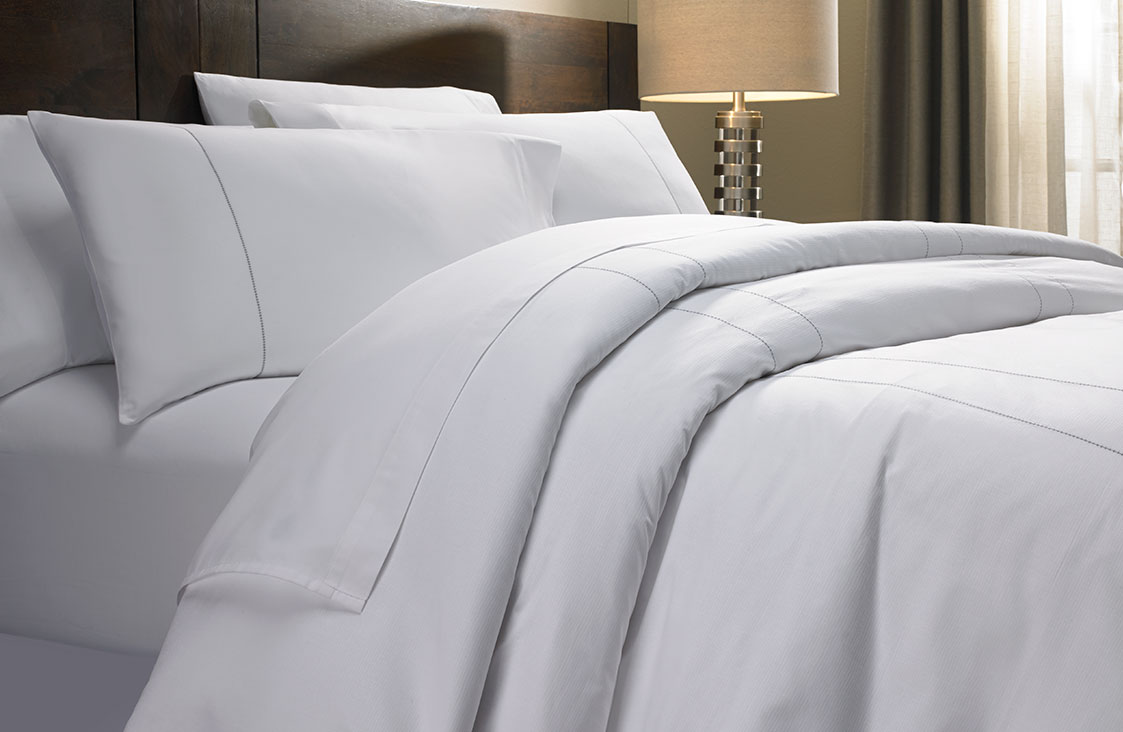
    In the competitive hospitality industry, every decision impacts your bottom line and guest satisfaction. When it comes to bedding, hoteliers face a crucial choice: duvets with duvet covers, comforters, or traditional blankets. Let’s explore why duvets often emerge as the winner in this three-way comparison.

    A Hotelier’s Perspective

    As a hotel industry expert and frequent traveler, I’ve seen firsthand the impact of bedding choices on guest perceptions and booking decisions. In fact, if I see a hotel using comforters or blankets in their photos, I never book those hotels. Why? Because I know from experience that blankets and comforters are not as hygienic as duvets with removable covers. This isn’t just a personal preference – it’s a concern shared by many discerning travelers who prioritize cleanliness and comfort.

    Cost Savings: Breaking Down the Numbers

    1. Laundry Expenses

    One of the most significant factors in bedding costs is laundry:

    • Duvets with Covers: Only the cover needs frequent washing, while the insert can go months between cleanings.
    • Comforters: Require washing after each guest stay, leading to higher laundry costs.
    • Blankets: Need frequent washing, often after every guest, increasing water and energy usage.

    Comparison:

    • Duvet covers: Wash after each guest
    • Duvet inserts: Wash every 3-6 months
    • Comforters: Wash after each guest
    • Blankets: Wash after each guest, often with sheets

    2. Lifespan and Durability

    The longevity of your bedding directly affects replacement costs:

    • Duvets: With proper care, a high-quality duvet can last for years. Covers are easily replaced when worn.
    • Comforters: Tend to wear out faster due to frequent washing and direct guest contact.
    • Blankets: Often show wear quickly, requiring more frequent replacement.

    3. Inventory Management

    Simplified inventory can lead to significant savings:

    • Duvets: One insert with multiple cover options offers versatility for seasonal changes.
    • Comforters: May require separate summer and winter options, increasing inventory complexity.
    • Blankets: Often need layering for temperature control, requiring multiple types in stock.

    Beyond Cost: Additional Considerations

    1. Guest Experience

    Comfort and aesthetics play a crucial role in guest satisfaction:

    • Duvets: Offer a luxurious feel and are associated with high-end hotels.
    • Comforters: Provide a homey feel but may be too warm for some guests.
    • Blankets: Offer customizable warmth but may appear less premium.

    2. Hygiene and Cleanliness

    Maintaining a clean and hygienic environment is paramount:

    • Duvets: Covers provide an easily cleaned barrier, protecting the insert from dust and allergens.
    • Comforters: Can trap dust and allergens, requiring more frequent deep cleaning.
    • Blankets: Often made of materials that attract dust, requiring meticulous care.

    As mentioned earlier, the hygiene factor of duvets is so significant that it can be a deal-breaker for many guests, myself included. The peace of mind that comes with knowing you’re sleeping under freshly laundered bedding cannot be overstated.

    3. Room Turnaround Efficiency

    Quicker room preparation means more efficient operations:

    • Duvets: Beds are typically faster to make with a duvet.
    • Comforters: Similar to duvets in terms of bed-making efficiency.
    • Blankets: Can be more time-consuming to arrange, especially if using multiple layers.

    Making the Right Choice for Your Hotel

    When deciding between duvets, comforters, and blankets, consider:

    1. Initial Investment: Duvets may have a higher upfront cost but offer long-term savings.
    2. Laundry Capabilities: Assess your laundry facilities’ capacity to handle different bedding types.
    3. Guest Demographics: Consider your typical guests’ preferences and expectations.
    4. Climate: Your location’s weather patterns may influence the best bedding choice.
    5. Guest Perceptions: Remember that your bedding choice can significantly impact booking decisions, especially for hygiene-conscious travelers.

    Shopping for Duvets on Zarnik.com

    Now that we’ve established the benefits of duvets for hotels, let’s look at how you can easily purchase high-quality duvets and duvet covers from Zarnik.com, India’s leading B2B marketplace for hotel supplies.

    Why Choose Zarnik for Your Hotel Bedding Needs

    1. Quality Assurance: All products are sourced from top brands, ensuring high-quality bedding for your guests.
    2. Competitive Pricing: Enjoy wholesale prices on bulk orders, making it cost-effective to upgrade all your rooms.
    3. Convenience: One-stop-shop for all your hotel bedding needs, from duvets and covers to sheets and pillowcases.
    4. Expert Support: Dedicated customer service team to assist with your orders and inquiries.
    5. Reliable Delivery: Partner with trusted logistics providers to ensure your orders reach you safely and on time.

    How to Order

    1. Visit the “Duvets, Comforters & Blankets” category on Zarnik.com
    2. Browse through the available options and select the products that best suit your needs
    3. Add items to your cart and proceed to checkout
    4. Enjoy hassle-free delivery right to your hotel

    By choosing duvets and shopping through Zarnik.com, you’re not only investing in guest comfort and hygiene but also streamlining your procurement process. This efficient approach to hotel bedding can significantly contribute to cost savings and improved guest satisfaction in the long run.

    Conclusion: The Duvet Advantage

    While comforters and blankets have their place, duvets with duvet covers often emerge as the most cost-effective and guest-friendly option for hotels. They offer a balance of luxury, practicality, and cost savings that’s hard to beat. By reducing laundry costs, simplifying inventory, and enhancing the guest experience, duvets prove to be a wise investment for hotels of all sizes.

    Moreover, in an era where hygiene is more important than ever, the choice of duvets can be a powerful marketing tool. It sends a clear message to potential guests that your hotel prioritizes cleanliness and guest comfort.

    Consider making the switch to duvets and start reaping the benefits of this smart, cost-effective bedding solution. Your guests—and your bottom line—will thank you. And who knows? You might just win over discerning travelers like myself who make booking decisions based on these important details.

  • White Bed Sheets: 7 Brilliant Reasons Hotels Love Them

    White Bed Sheets: 7 Brilliant Reasons Hotels Love Them

    When it comes to creating the perfect guest experience, every detail matters in the hospitality industry. One crucial aspect that often goes unnoticed but plays a significant role in guest satisfaction is the choice of bed linens. Hotels worldwide have long favored white bed sheets and linens, and for good reason. Let’s explore the compelling reasons behind this industry-wide preference.

    1. White: The Color of Cleanliness

    White bed linens are synonymous with cleanliness and hygiene, two factors that are paramount in the hospitality industry. When guests enter a hotel room and see crisp, white sheets, they immediately associate it with a clean and well-maintained environment. This visual cue can significantly impact a guest’s first impression and overall perception of the hotel’s cleanliness standards.

    • White shows dirt and stains easily, ensuring that housekeeping staff can quickly identify and address any cleanliness issues.
    • The stark contrast between white linens and any potential impurities makes it easier to maintain high standards of cleanliness.
    • Guests can visually confirm the cleanliness of their bedding, providing peace of mind and comfort during their stay.

    2. White Bed Sheets Conveying a Sense of Luxury

    White bed sheets and linens have long been associated with luxury and high-end accommodations. This perception stems from the historical use of white linens in upscale hotels and the overall aesthetic appeal of a pristine, white bed.

    • White creates a sense of spaciousness and light in a room, enhancing the overall ambiance.
    • The crisp, clean look of white linens can make even a modest room feel more upscale and inviting.
    • High-thread-count white sheets have a distinctive sheen that adds to the luxurious feel of the bedding.

    3. Efficient Laundry Management

    One of the practical advantages of using white linens is the simplification of laundry processes. This efficiency can lead to significant cost savings and improved operations for hotels.

    • White linens can be washed together without the risk of color bleeding or transfer.
    • Hotels can use stronger cleaning agents and higher water temperatures on white linens without worrying about color fading.
    • The ability to wash all linens together reduces the need for separate laundry loads, saving time, water, and energy.

    4. Wide Availability and Ease of Replacement

    White linens are a staple in the hospitality industry, making them readily available from various suppliers. This availability offers several advantages:

    • Hotels can easily restock their linen inventory as needed.
    • Competitive pricing due to high demand and numerous suppliers.
    • Consistency in appearance is maintained even when purchasing from different sources or at different times.

    5. Simplified Inventory Management

    Using white linens streamlines inventory management processes for hotels:

    • No need to track multiple colors or patterns of linens.
    • Easier to maintain a uniform look across all rooms and suites.
    • Simplified ordering and restocking processes.

    6. Longevity and Durability

    While it might seem counterintuitive, white linens often have a longer lifespan compared to colored alternatives:

    • White fabrics don’t fade or lose their vibrancy over time like colored linens.
    • The ability to use stronger cleaning agents helps in maintaining the original brightness of white linens.
    • Even if slight discoloration occurs over time, it’s less noticeable on white linens compared to colored ones.

    7. Minimizing Visual Wear and Tear

    White linens are better at concealing certain signs of wear and tear:

    • Pilling and lint are less noticeable on white fabrics compared to darker colors.
    • Minor fabric wear is less visible on white linens, maintaining a fresher appearance for longer.
    • Any visible wear can be more effectively treated with bleaching agents, prolonging the linen’s usable life.

    Explore Quality Bed and Bath Linens for Your Hotel

    Now that we’ve explored the reasons why hotels prefer white bed sheets and linens, you might be wondering where to find high-quality options for your establishment. Look no further than zarnik.com, your one-stop shop for premium hotel supplies. Let’s explore the range of bed and bath linens available:

    Bath Towels & Accessories

    Elevate your guests’ bathroom experience with our extensive collection of bath linens:

    • Bath Mats & Rugs: Provide comfort and safety with absorbent, non-slip options.
    • Bath Robes: Offer luxury and comfort with plush, hotel-quality robes.
    • Bath Towels: Choose from a variety of sizes and thread counts to suit your needs.
    • Hand & Face Towels: Stock up on essential smaller towels for guest convenience.
    • Shower Curtains: Find stylish and durable options to complete your bathroom decor.

    Bed Linens & Bedding

    Create the perfect sleep environment for your guests with our comprehensive bedding selection:

    By choosing zarnik.com for your hotel’s bed and bath linens, you’re ensuring that you’re getting high-quality products designed specifically for the hospitality industry. Our wide range of options allows you to maintain the crisp, clean, white aesthetic we’ve discussed, while also providing the comfort and luxury your guests expect.

    Remember, investing in quality linens not only enhances guest experience but also contributes to the longevity of your supplies, potentially reducing long-term costs. Explore our categories today to find the perfect white bed sheets and complementary linens for your hotel.

    Conclusion

    The preference for white bed sheets and linens in the hotel industry is not just a matter of tradition but a practical and strategic choice. From creating a perception of cleanliness and luxury to simplifying operations and maintenance, white linens offer numerous benefits. By understanding and leveraging these advantages, hotels can enhance guest satisfaction, streamline their operations, and maintain high standards of quality and cleanliness. As the hospitality industry continues to evolve, the timeless appeal and practical benefits of white linens ensure their continued prominence in hotels worldwide.

    References:

    The Real Reason Hotels Use White Sheets: https://www.rd.com/article/why-do-hotels-use-white-bedsheets

  • White Bed Sheets: 7 Brilliant Reasons Hotels Love Them

    White Bed Sheets: 7 Brilliant Reasons Hotels Love Them

    When it comes to creating the perfect guest experience, every detail matters in the hospitality industry. One crucial aspect that often goes unnoticed but plays a significant role in guest satisfaction is the choice of bed linens. Hotels worldwide have long favored white bed sheets and linens, and for good reason. Let’s explore the compelling reasons behind this industry-wide preference.

    1. White: The Color of Cleanliness

    White bed linens are synonymous with cleanliness and hygiene, two factors that are paramount in the hospitality industry. When guests enter a hotel room and see crisp, white sheets, they immediately associate it with a clean and well-maintained environment. This visual cue can significantly impact a guest’s first impression and overall perception of the hotel’s cleanliness standards.

    • White shows dirt and stains easily, ensuring that housekeeping staff can quickly identify and address any cleanliness issues.
    • The stark contrast between white linens and any potential impurities makes it easier to maintain high standards of cleanliness.
    • Guests can visually confirm the cleanliness of their bedding, providing peace of mind and comfort during their stay.

    2. White Bed Sheets Conveying a Sense of Luxury

    White bed sheets and linens have long been associated with luxury and high-end accommodations. This perception stems from the historical use of white linens in upscale hotels and the overall aesthetic appeal of a pristine, white bed.

    • White creates a sense of spaciousness and light in a room, enhancing the overall ambiance.
    • The crisp, clean look of white linens can make even a modest room feel more upscale and inviting.
    • High-thread-count white sheets have a distinctive sheen that adds to the luxurious feel of the bedding.

    3. Efficient Laundry Management

    One of the practical advantages of using white linens is the simplification of laundry processes. This efficiency can lead to significant cost savings and improved operations for hotels.

    • White linens can be washed together without the risk of color bleeding or transfer.
    • Hotels can use stronger cleaning agents and higher water temperatures on white linens without worrying about color fading.
    • The ability to wash all linens together reduces the need for separate laundry loads, saving time, water, and energy.

    4. Wide Availability and Ease of Replacement

    White linens are a staple in the hospitality industry, making them readily available from various suppliers. This availability offers several advantages:

    • Hotels can easily restock their linen inventory as needed.
    • Competitive pricing due to high demand and numerous suppliers.
    • Consistency in appearance is maintained even when purchasing from different sources or at different times.

    5. Simplified Inventory Management

    Using white linens streamlines inventory management processes for hotels:

    • No need to track multiple colors or patterns of linens.
    • Easier to maintain a uniform look across all rooms and suites.
    • Simplified ordering and restocking processes.

    6. Longevity and Durability

    While it might seem counterintuitive, white linens often have a longer lifespan compared to colored alternatives:

    • White fabrics don’t fade or lose their vibrancy over time like colored linens.
    • The ability to use stronger cleaning agents helps in maintaining the original brightness of white linens.
    • Even if slight discoloration occurs over time, it’s less noticeable on white linens compared to colored ones.

    7. Minimizing Visual Wear and Tear

    White linens are better at concealing certain signs of wear and tear:

    • Pilling and lint are less noticeable on white fabrics compared to darker colors.
    • Minor fabric wear is less visible on white linens, maintaining a fresher appearance for longer.
    • Any visible wear can be more effectively treated with bleaching agents, prolonging the linen’s usable life.

    Explore Quality Bed and Bath Linens for Your Hotel

    Now that we’ve explored the reasons why hotels prefer white bed sheets and linens, you might be wondering where to find high-quality options for your establishment. Look no further than zarnik.com, your one-stop shop for premium hotel supplies. Let’s explore the range of bed and bath linens available:

    Bath Towels & Accessories

    Elevate your guests’ bathroom experience with our extensive collection of bath linens:

    • Bath Mats & Rugs: Provide comfort and safety with absorbent, non-slip options.
    • Bath Robes: Offer luxury and comfort with plush, hotel-quality robes.
    • Bath Towels: Choose from a variety of sizes and thread counts to suit your needs.
    • Hand & Face Towels: Stock up on essential smaller towels for guest convenience.
    • Shower Curtains: Find stylish and durable options to complete your bathroom decor.

    Bed Linens & Bedding

    Create the perfect sleep environment for your guests with our comprehensive bedding selection:

    By choosing zarnik.com for your hotel’s bed and bath linens, you’re ensuring that you’re getting high-quality products designed specifically for the hospitality industry. Our wide range of options allows you to maintain the crisp, clean, white aesthetic we’ve discussed, while also providing the comfort and luxury your guests expect.

    Remember, investing in quality linens not only enhances guest experience but also contributes to the longevity of your supplies, potentially reducing long-term costs. Explore our categories today to find the perfect white bed sheets and complementary linens for your hotel.

    Conclusion

    The preference for white bed sheets and linens in the hotel industry is not just a matter of tradition but a practical and strategic choice. From creating a perception of cleanliness and luxury to simplifying operations and maintenance, white linens offer numerous benefits. By understanding and leveraging these advantages, hotels can enhance guest satisfaction, streamline their operations, and maintain high standards of quality and cleanliness. As the hospitality industry continues to evolve, the timeless appeal and practical benefits of white linens ensure their continued prominence in hotels worldwide.

    References:

    The Real Reason Hotels Use White Sheets: https://www.rd.com/article/why-do-hotels-use-white-bedsheets

  • Successful Towel Reuse Program: 3 Step Implementation Guide for Hotels

    Successful Towel Reuse Program: 3 Step Implementation Guide for Hotels

    Introduction

    As the hospitality industry increasingly embraces eco-friendly practices, towel reuse programs have emerged as a simple yet impactful way for hotels to reduce their environmental footprint and operational costs. These initiatives encourage guests to reuse their bath towels during their stay, significantly reducing water consumption, energy usage, and detergent use. Beyond the direct savings, such programs appeal to the growing number of environmentally conscious travelers, enhancing your hotel’s reputation and potentially attracting more guests.

    According to a study by the US Travel Data Center, an estimated 43 million “environmental travelers” in the USA alone are concerned about supporting environmental efforts. This growing trend underscores the importance of implementing sustainable practices in hotels.

    How Hilton saved millions of dollars with Towel Reuse Program.

    The Rising Trend of Towel Reuse in India

    Recent studies indicate a growing acceptance of towel reuse programs among Indian travelers. According to a report published by Hotelier India, 55% of travelers are now adopting eco-friendly habits, including participating in towel reuse initiatives. This trend underscores the importance of implementing such programs in hotels across India.

    https://www.hotelierindia.com/operations/towel-reuse-on-the-rise-55-travellers-adopting-eco-friendly-habits

    Benefits of Implementing a Towel Reuse Program

    1. Environmental Impact: Significant reduction in water consumption, energy usage, and detergent use.
    2. Cost Savings: Hotels can cut laundry expenses considerably. For example, the Holiday Inn in Burlington, North Carolina, USA, saved almost US$20,000 yearly by reducing room-cleaning time by six minutes per room with its sheet and towel reuse program.
    3. Guest Satisfaction: Many eco-conscious travelers appreciate and seek out hotels with such initiatives. A study by CNN Travel found that guests who participate in a hotel’s sustainability efforts reported higher satisfaction with their stay.
    4. Extended Linen Life: Less frequent washing means less wear on fabrics, prolonging their life and reducing replacement costs.
    5. Operational Efficiency: Housekeeping staff have more time to focus on other tasks, improving overall service quality.

    Implementing Your Towel Reuse Program: A Step-by-Step Guide

    1. Communicate Effectively with Guests

    Clear and strategic communication is crucial for the success of your towel reuse program. Here’s how to ensure your message reaches guests at various touchpoints:

    a) Publish Information on Your Website

    • Create a dedicated page explaining your towel reuse program and other eco-friendly initiatives.
    • Highlight the environmental benefits and how guests can participate.

    b) Include Information in Reservation Confirmations

    Sample message for reservation confirmation email:

    As part of our commitment to sustainability, we offer a towel reuse program. By participating, you can help us save water and energy. Simply hang your towels if you wish to reuse them, or place them on the floor for fresh ones. Together, we can make a positive impact on the environment.

    c) Use In-Room Messaging

    Research by Cornell University on “Invoking Social Norms: a Social Psychology Perspective on Improving Hotels’ Linen Reuse Programs” found that descriptive messaging is most effective. Here’s a tested message that achieved a 47% participation rate:

    “JOIN YOUR FELLOW GUESTS IN HELPING TO SAVE THE ENVIRONMENT. Almost 75% of guests who are asked to participate in our new resource savings program do help by using their towels more than once. You can join your fellow guests in this program to help save the environment by reusing your towels during your stay.”

    Place this message on hanging cards or tent cards in multiple locations within the room to ensure visibility.

    You can read the complete article on the research here:

    Additional sample messages for tent cards:

    1. “Your small act can make a big difference. Reuse your towels and help us save thousands of liters of water annually.”
    2. “Be part of the solution! Hang your towels to reuse them and help us reduce water and energy consumption.”

    d) Communicate at Check-In

    Sample script for check-in:

    “In your room, you’ll find information about our towel reuse program. By hanging your towels, you indicate you’d like to reuse them. This helps us save water and energy. If you need fresh towels at any time, just let our housekeeping staff know.”

    2. Provide Proper Towel Hanging Facilities

    To encourage reuse, it’s crucial to ensure guests have appropriate means to dry their towels effectively:

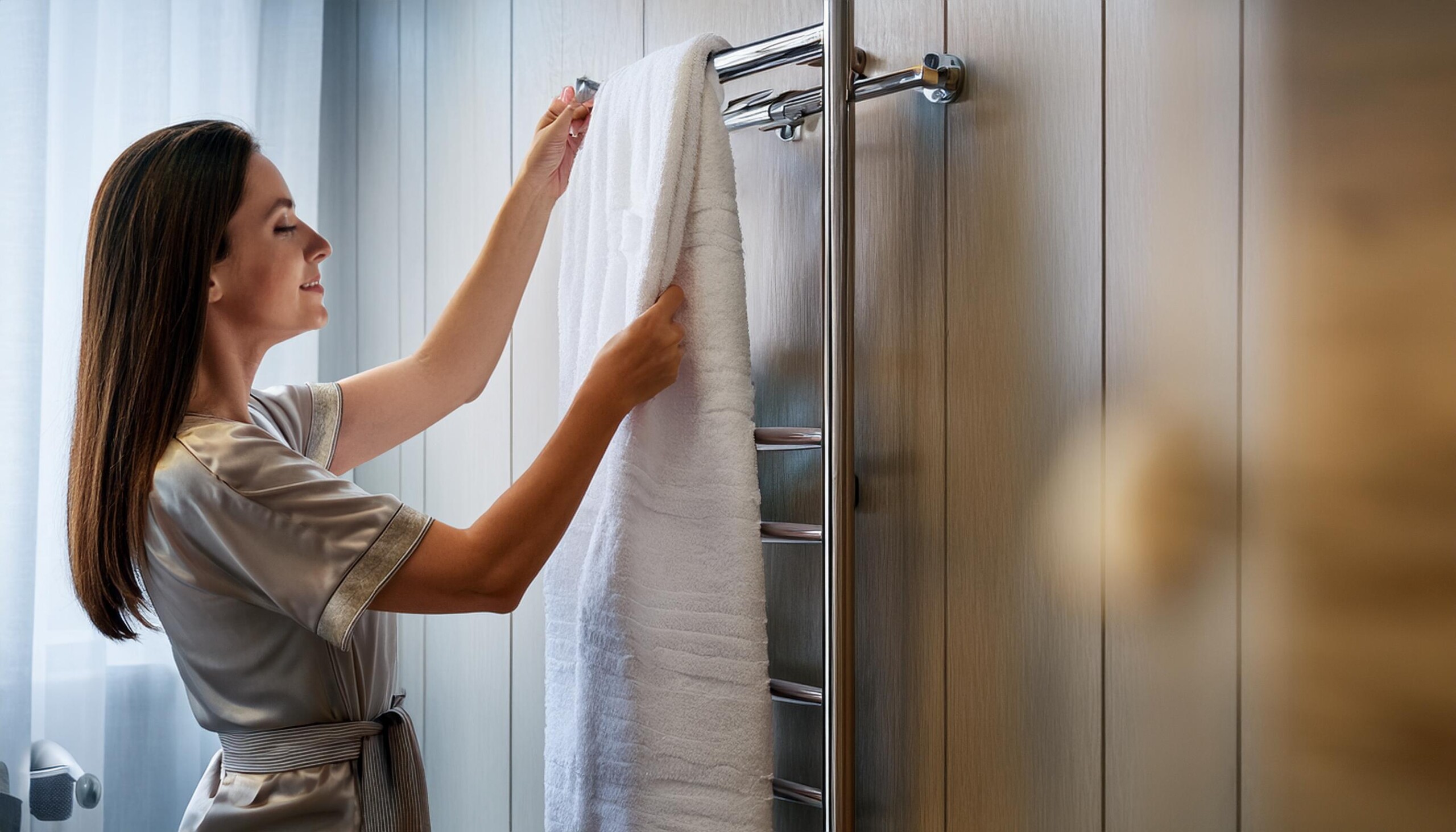
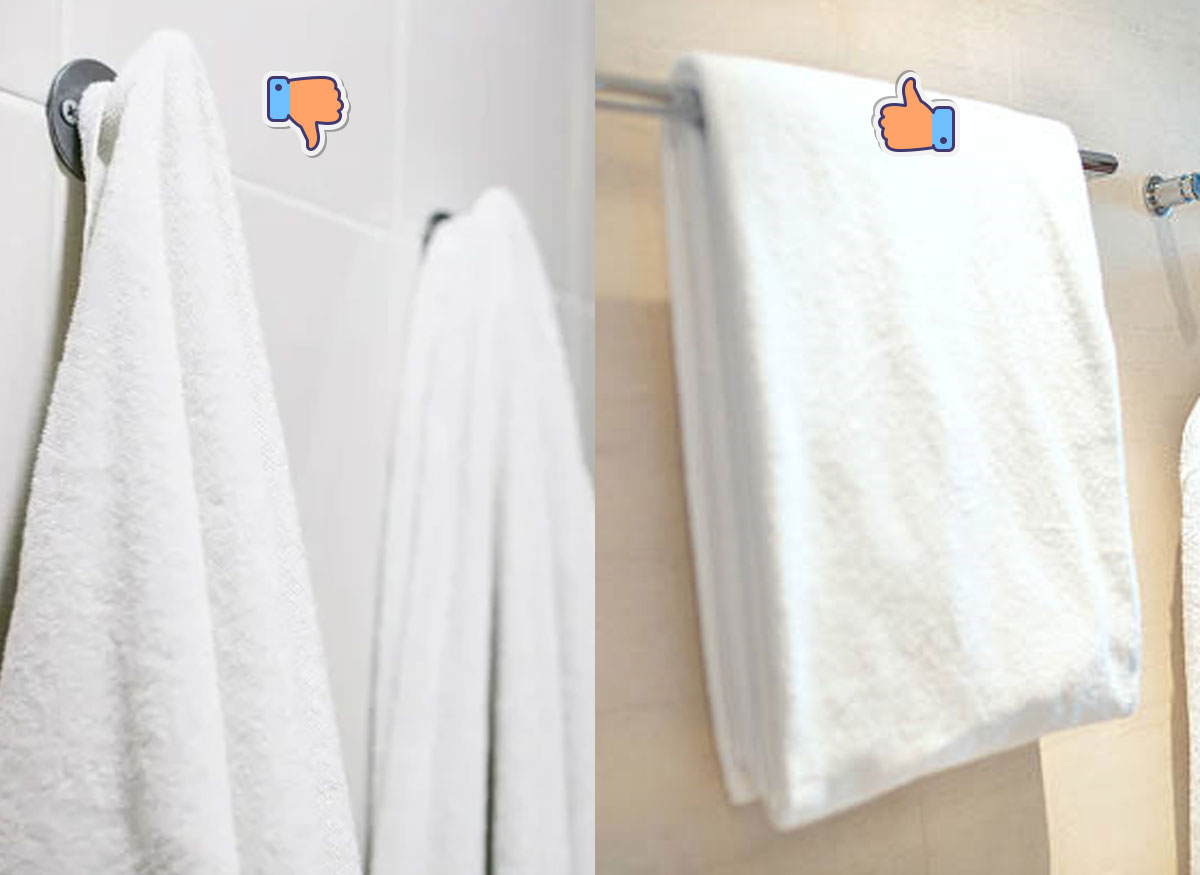
    • Install proper towel racks or rails in bathrooms, not just hooks. No guest wants to use a soggy towel, so it’s essential to provide adequate hanging space for towels to dry completely before their next use.
    • Avoid relying solely on hooks for towel hanging. If guests only have hooks to hang their towels, there’s little chance the towels will dry properly, discouraging reuse.
    • Ensure adequate ventilation in bathrooms to prevent towels from remaining damp and musty.
    • If space allows, install multiple towel bars to accommodate different towel sizes and multiple guests.
    • For hotels with limited wall space, consider over-the-door towel racks or freestanding towel stands as alternatives.

    By providing proper drying facilities, you not only encourage guests to participate in your towel reuse program but also enhance their overall experience. Dry, fresh-feeling towels are more likely to be reused, increasing the success rate of your sustainability efforts while maintaining guest comfort and satisfaction.

    Type of towel hangers for towel reuse program.
    Type of towel hangers for towel reuse program.

    3. Train Your Housekeeping Team

    Proper staff training is essential for the program’s success:

    • Educate staff on the importance of the program and its environmental impact.
    • Provide clear guidelines on identifying and respecting guests’ towel reuse choices.
    • Train staff to replace towels only when they are placed on the floor or in designated areas.
    • Implement a system for staff to track participation rates and report any issues.

    Remember, the success of our towel reuse program depends on you. This video demonstrates, even the most willing guests can’t participate effectively if we don’t follow through on our end. Your attention to detail and respect for guests’ choices are crucial in making this program work.

    The Environmental and Financial Impact

    Implementing a towel reuse program can lead to significant environmental and financial benefits:

    • Water Conservation: A typical hotel can save 17 gallons of water per occupied room night.
    • Energy Savings: Reduced hot water usage leads to lower energy consumption.
    • Detergent Reduction: Less frequent washing means reduced chemical usage.
    • Cost Savings: Hotels can save approximately $6.50 per occupied room night through linen and towel reuse programs.
    • Laundry Reduction: According to the American Hotel and Lodging Association, requesting patrons to participate in the program reduces the number of loads of laundry—as well as related water, sewer, energy, and labor costs—by 17 percent.

    Frequently Asked Questions

    To help you better understand and implement a successful towel reuse program, here are answers to some commonly asked questions:

    1. What are the main benefits of a towel reuse program for hotels?
      Towel reuse programs offer multiple benefits:
      • Environmental impact: They significantly reduce water consumption, energy usage, and detergent use.
      • Cost savings: Hotels can cut laundry expenses considerably.
      • Guest satisfaction: Many eco-conscious travelers appreciate and seek out hotels with such initiatives.
      • Marketing advantage: It enhances the hotel’s image as an environmentally responsible business.
    2. How can hotels effectively communicate the towel reuse program to guests?
      Effective communication involves multiple touchpoints:
      • Website: Include program details on your sustainability page.
      • Reservation confirmations: Mention the program in booking emails.
      • Check-in: Brief guests about the program upon arrival.
      • In-room messaging: Use clear, strategically placed cards or signs in the bathroom.
      • Staff interaction: Train staff to politely remind guests about the program when appropriate.
    3. What’s the best way to phrase the towel reuse message for maximum participation?
      Research shows that social norm messaging is most effective. For example: “JOIN YOUR FELLOW GUESTS IN HELPING TO SAVE THE ENVIRONMENT. Almost 75% of guests participate in our resource-saving program by reusing their towels. You can join them in helping to save the environment during your stay.” This approach leverages the power of social influence to encourage participation.
    4. How can hotels ensure guests have a positive experience with towel reuse?
      To ensure a positive experience:
      • Provide proper drying facilities like towel racks or heated rails.
      • Ensure bathrooms are well-ventilated to prevent damp towels.
      • Train housekeeping to respect guests’ choices and replace towels promptly when requested.
      • Offer high-quality, absorbent towels that dry quickly.
      • Provide clear instructions on how to participate in the program.
    5. What are some common challenges in implementing a towel reuse program, and how can they be addressed?
      Common challenges include:
      • Guest resistance: Address by clearly communicating benefits and making participation easy.
      • Staff inconsistency: Solve with thorough training and regular reminders.
      • Ineffective messaging: Improve by testing different message formats and placements.
      • Lack of proper facilities: Invest in adequate towel racks and ventilation.
      • Difficulty tracking impact: Implement systems to measure water and energy savings.

    Conclusion

    Implementing a towel reuse program is a simple yet effective way for hotels to reduce their environmental impact while cutting operational costs. By communicating clearly with guests, providing proper facilities, and training staff effectively, you can create a successful program that benefits both your hotel and the planet. As more travelers seek eco-friendly accommodations, such initiatives can give your hotel a competitive edge in the market.

    Remember, the key to success lies in making it easy and appealing for guests to participate. Start small, measure your results, and continuously improve your program to maximize its impact and guest satisfaction. With the insights provided in this guide and the answers to common questions, you’re well-equipped to launch a successful towel reuse program that will benefit your hotel, your guests, and the environment.

    References

    Hotelier India. (2023). Towel reuse on the rise: 55% travellers adopting eco-friendly habits. Retrieved from https://www.hotelierindia.com/operations/towel-reuse-on-the-rise-55-travellers-adopting-eco-friendly-habits

    Goldstein, N. J., Cialdini, R. B., & Griskevicius, V. (2008). A Room with a Viewpoint: Using Social Norms to Motivate Environmental Conservation in Hotels. Journal of Consumer Research, 35(3), 472-482.

      We invite readers to share their experiences with towel reuse programs or ask any questions in the comments section below. Your insights can help fellow hoteliers improve their sustainability initiatives.

    1. Buying Hotel Linens: 16 Frequent Questions Answered

      Buying Hotel Linens: 16 Frequent Questions Answered

      When it comes to creating a luxurious and comfortable experience for guests, the quality of hotel linens plays a pivotal role. From bed sheets to towels, the right choice of materials and maintenance practices can significantly enhance guest satisfaction. This article answers 16 frequently asked questions about buying hotel linens, providing insights into thread counts, fabric types, maintenance, and more.

      1. What is the Ideal Thread Count for Hotel Bed Sheets?

      The ideal thread count for hotel bed sheets typically ranges from 300 to 500 TC (thread count). In India, many hotels commonly use 300 TC, while premium establishments may opt for 400 TC. Thread count is an important indicator of quality because it reflects the density of the fabric. A higher thread count usually results in a softer and more luxurious feel, which is essential for enhancing guest comfort. However, it’s essential to balance thread count with other factors like weave type and fabric quality to ensure a truly superior product.

      2. Does a Higher Thread Count Always Indicate Superior Quality?

      While a higher thread count can suggest better quality, it does not always equate to superior comfort. Fabrics with excessively high thread counts may become heavier and less breathable, leading to increased wear and tear over time. For instance, a 600 TC fabric woven with two-ply threads effectively becomes 300 TC on the top layer, which may not enhance comfort as expected. In some cases, guests may prefer lighter fabrics that allow for better airflow and comfort during sleep. Therefore, while higher thread counts can feel cozier due to their weight, they do not always translate to a smoother texture against the skin.

      3. Can You Explain What Thread Count Is and Its Significance?

      Thread count refers to the number of threads woven together per square inch of fabric. It is commonly used to assess the quality of cotton sheets and is an essential factor in determining how soft and durable the linen will be. A standard range for high-quality sheets lies between 300 to 500 TC. While higher counts can indicate softness, they can also lead to thicker fabrics that are less breathable. It’s important for hotel managers to understand that while thread count is significant, other factors such as fiber quality and weave type are equally important in determining overall linen quality.

      4. What Advantages Does Polycotton Offer for Hotel Linens?

      Polycotton blends—typically a mix of polyester and cotton—are advantageous for budget-conscious hotels due to several key benefits:

      • Durability: Polycotton fabrics are known for their strength and longevity compared to pure cotton options.
      • Wrinkle Resistance: They resist wrinkling better than 100% cotton linens, which means less time spent on ironing and maintenance.
      • Quick Drying: Polycotton dries faster than cotton, making it an efficient choice for laundry operations.
      • Cost-Effectiveness: Given their durability and low maintenance needs, polycotton can be more economical over time.

      These advantages make polycotton an appealing option for hotels looking to balance quality with budget constraints.

      5. Which is Better for Hotel Use: 100% Cotton or Polycotton?

      For hotel linens use, polycotton is generally preferred over 100% cotton due to its durability and cost-effectiveness:

      • Longevity: While pure cotton linens may need replacement every 8 to 12 months, polycotton can last over a year and a half with proper care.
      • Maintenance: Polycotton requires less frequent washing due to its stain-resistant properties, which can save on laundry costs.
      • Comfort: Although some guests may prefer the feel of 100% cotton against their skin, many find that high-quality polycotton blends offer an acceptable level of comfort without compromising durability.

      Ultimately, hotels must consider their target market and budget when deciding between these two options.

      6. How Frequently Should Hotel Linens Be Replaced for Optimal Hygiene?

      The frequency of hotel linen replacement largely depends on hotel occupancy rates and laundry practices:

      • For hotels with over 70% occupancy, linens should be replaced every 8 to 12 months if maintaining a PAR (Per Available Room) level of 3.
      • If maintaining a PAR level of 4, replacements may be needed every 12 to 14 months.
      • Additionally, factors such as the chemical dosing used during laundry cycles and overall wear from guest use play significant roles in determining how often linens should be replaced.

      Regular assessments of linen condition are crucial in ensuring that guests receive clean and comfortable bedding during their stay.

      7. How Much Linen Stock Should I Maintain for My Hotel?

      The appropriate linen stock level correlates with hotel occupancy rates:

      • For hotels averaging above 80% occupancy, maintaining a PAR stock of 4 is recommended; this means having four sets of linens available for each room.
      • If occupancy exceeds 90%, then a PAR stock of 5 is ideal.
      • Conversely, hotels with occupancy below 80% can operate efficiently with a PAR stock of 3, though anything lower is not advisable for optimal operations.

      Maintaining adequate stock levels ensures that there are enough linens available during peak times without running short during laundry cycles.

      8. What Does PAR Level Stock Mean in the Context of Hotel Linens?

      PAR stands for “Per Available Room.” This metric indicates how many sets of linens should be available for each room in the hotel:

      • For example, maintaining a PAR level of 3 means having three complete sets of linens available for each room.
      • This ensures that there are enough linens on hand to accommodate laundry cycles without running short during peak occupancy periods.

      Understanding PAR levels helps hotel managers plan their inventory effectively and maintain high standards of cleanliness.

      9. How Can I Determine the Correct Sizes for Bed Sheets and Duvet Covers?

      To determine the correct sizes for bed sheets and duvet covers:

      1. Measure the top dimension (length and width) of the mattress.
      2. Add twice the thickness of the mattress to cover the sides.
      3. Include an additional 25 cm (approximately 10 inches) for tucking in at the sides.

      This calculation ensures that bed sheets fit snugly without slipping off while providing enough fabric for tucking under the mattress edges.

      10. Should I Invest in Duvets, Comforters, or Blankets for My Hotel Rooms?

      Hotels should invest in duvets and duvet covers rather than comforters or blankets due to several advantages:

      • Lower Laundry Costs: Duvet covers can be laundered separately from the duvet itself, reducing overall laundry costs since duvets typically only need washing once every month or every three months unless heavily soiled.
      • Hygienic Benefits: Duvets require less frequent washing compared to comforters or blankets that must be cleaned after each guest stay or nightly—leading to quicker deterioration in quality.
      • Dust Accumulation: Blankets tend to accumulate dust more rapidly than duvets due to their fabric type.

      Overall, duvets provide a more economical and hygienic solution while enhancing guest comfort.

      11. What are Dobby Borders, and How Do They Enhance Linen Quality?

      Dobby borders are decorative patterns woven into fabric that can enhance its aesthetic appeal by adding texture and visual interest. However, when purchasing towels or linens for hotels:

      • It is advisable to avoid dobby borders as they can lead to inconsistencies if not ordered in bulk.
      • Many major hotel chains have moved towards simpler towel designs without dobby borders to maintain uniformity across their properties.

      Opting for simpler designs can help ensure consistency in appearance throughout the hotel’s offerings.

      12. Should I Consider Purchasing Bath Towels with Dobby Borders?

      It is generally better to purchase bath towels without dobby borders because sourcing consistent patterns can be challenging unless bought in bulk:

      • Inconsistent designs can detract from the overall aesthetic appeal of guest bathrooms.
      • Many major hotel chains have adopted simpler towel designs without dobby borders as part of their standard offerings.

      Choosing uniform towels contributes positively to guests’ perceptions of cleanliness and professionalism within your establishment.

      13. What Distinguishes a Pool Towel from a Standard Bath Towel?

      Pool towels differ from standard bath towels in several ways:

      • Size: Pool towels are generally larger than regular bath towels.
      • Thickness: They tend to be thicker as they need to absorb more water after swimming.
      • Design Features: Pool towels often feature distinctive stripes or colors that help differentiate them from bath towels at a glance.

      These characteristics make pool towels suitable for outdoor use while ensuring guests have ample coverage after swimming.

      14. Is it Better to Choose Pillow Covers with a 1-Inch Flap or a Bag Style?

      For hotels, bag-style pillow covers are preferable because they provide a neater appearance compared to those with flaps:

      • Bag-style covers allow pillows to be inserted easily while maintaining an aesthetically pleasing look on beds.
      • They also prevent pillow contents from spilling out or becoming visible when placed on display.

      Choosing bag-style covers enhances overall presentation while ensuring ease of use during housekeeping operations.

      15. Why Should I Buy Mattress Protectors for Hotel Bedding?

      Mattress protectors extend the life of mattresses by shielding them from spills, stains, allergens, and dust mites:

      • They help maintain hygiene standards by providing an additional barrier against moisture.
      • Protectors also reduce wear on mattresses caused by regular use over time.

      Investing in quality mattress protectors ultimately leads to lower replacement costs down the line while ensuring guests enjoy clean sleeping environments.

      16. Why is it Important to Have Pillow Protectors for Hotel Pillows?

      Pillow protectors serve as an additional barrier against moisture and allergens while also prolonging the lifespan of pillows:

      • They help keep pillows clean by preventing sweat or spills from penetrating into the pillow material.
      • Regularly laundering pillow protectors ensures that pillows remain fresh and hygienic between guest stays.

      By using pillow protectors consistently across all rooms within your establishment, you enhance both guest comfort and hygiene standards significantly.

      Conclusion

      Understanding hotel linen quality involves considering various factors such as thread count, material composition, maintenance practices, and product selection. By making informed choices regarding linens and their upkeep, hotels can enhance guest experiences while optimizing operational efficiency.

      We invite you to share your thoughts on hotel linens in the comments below! What experiences have you had with hotel bedding?


    2. Buying Hotel Linens: 16 Frequent Questions Answered

      Buying Hotel Linens: 16 Frequent Questions Answered

      When it comes to creating a luxurious and comfortable experience for guests, the quality of hotel linens plays a pivotal role. From bed sheets to towels, the right choice of materials and maintenance practices can significantly enhance guest satisfaction. This article answers 16 frequently asked questions about buying hotel linens, providing insights into thread counts, fabric types, maintenance, and more.

      1. What is the Ideal Thread Count for Hotel Bed Sheets?

      The ideal thread count for hotel bed sheets typically ranges from 300 to 500 TC (thread count). In India, many hotels commonly use 300 TC, while premium establishments may opt for 400 TC. Thread count is an important indicator of quality because it reflects the density of the fabric. A higher thread count usually results in a softer and more luxurious feel, which is essential for enhancing guest comfort. However, it’s essential to balance thread count with other factors like weave type and fabric quality to ensure a truly superior product.

      2. Does a Higher Thread Count Always Indicate Superior Quality?

      While a higher thread count can suggest better quality, it does not always equate to superior comfort. Fabrics with excessively high thread counts may become heavier and less breathable, leading to increased wear and tear over time. For instance, a 600 TC fabric woven with two-ply threads effectively becomes 300 TC on the top layer, which may not enhance comfort as expected. In some cases, guests may prefer lighter fabrics that allow for better airflow and comfort during sleep. Therefore, while higher thread counts can feel cozier due to their weight, they do not always translate to a smoother texture against the skin.

      3. Can You Explain What Thread Count Is and Its Significance?

      Thread count refers to the number of threads woven together per square inch of fabric. It is commonly used to assess the quality of cotton sheets and is an essential factor in determining how soft and durable the linen will be. A standard range for high-quality sheets lies between 300 to 500 TC. While higher counts can indicate softness, they can also lead to thicker fabrics that are less breathable. It’s important for hotel managers to understand that while thread count is significant, other factors such as fiber quality and weave type are equally important in determining overall linen quality.

      4. What Advantages Does Polycotton Offer for Hotel Linens?

      Polycotton blends—typically a mix of polyester and cotton—are advantageous for budget-conscious hotels due to several key benefits:

      • Durability: Polycotton fabrics are known for their strength and longevity compared to pure cotton options.
      • Wrinkle Resistance: They resist wrinkling better than 100% cotton linens, which means less time spent on ironing and maintenance.
      • Quick Drying: Polycotton dries faster than cotton, making it an efficient choice for laundry operations.
      • Cost-Effectiveness: Given their durability and low maintenance needs, polycotton can be more economical over time.

      These advantages make polycotton an appealing option for hotels looking to balance quality with budget constraints.

      5. Which is Better for Hotel Use: 100% Cotton or Polycotton?

      For hotel linens use, polycotton is generally preferred over 100% cotton due to its durability and cost-effectiveness:

      • Longevity: While pure cotton linens may need replacement every 8 to 12 months, polycotton can last over a year and a half with proper care.
      • Maintenance: Polycotton requires less frequent washing due to its stain-resistant properties, which can save on laundry costs.
      • Comfort: Although some guests may prefer the feel of 100% cotton against their skin, many find that high-quality polycotton blends offer an acceptable level of comfort without compromising durability.

      Ultimately, hotels must consider their target market and budget when deciding between these two options.

      6. How Frequently Should Hotel Linens Be Replaced for Optimal Hygiene?

      The frequency of hotel linen replacement largely depends on hotel occupancy rates and laundry practices:

      • For hotels with over 70% occupancy, linens should be replaced every 8 to 12 months if maintaining a PAR (Per Available Room) level of 3.
      • If maintaining a PAR level of 4, replacements may be needed every 12 to 14 months.
      • Additionally, factors such as the chemical dosing used during laundry cycles and overall wear from guest use play significant roles in determining how often linens should be replaced.

      Regular assessments of linen condition are crucial in ensuring that guests receive clean and comfortable bedding during their stay.

      7. How Much Linen Stock Should I Maintain for My Hotel?

      The appropriate linen stock level correlates with hotel occupancy rates:

      • For hotels averaging above 80% occupancy, maintaining a PAR stock of 4 is recommended; this means having four sets of linens available for each room.
      • If occupancy exceeds 90%, then a PAR stock of 5 is ideal.
      • Conversely, hotels with occupancy below 80% can operate efficiently with a PAR stock of 3, though anything lower is not advisable for optimal operations.

      Maintaining adequate stock levels ensures that there are enough linens available during peak times without running short during laundry cycles.

      8. What Does PAR Level Stock Mean in the Context of Hotel Linens?

      PAR stands for “Per Available Room.” This metric indicates how many sets of linens should be available for each room in the hotel:

      • For example, maintaining a PAR level of 3 means having three complete sets of linens available for each room.
      • This ensures that there are enough linens on hand to accommodate laundry cycles without running short during peak occupancy periods.

      Understanding PAR levels helps hotel managers plan their inventory effectively and maintain high standards of cleanliness.

      9. How Can I Determine the Correct Sizes for Bed Sheets and Duvet Covers?

      To determine the correct sizes for bed sheets and duvet covers:

      1. Measure the top dimension (length and width) of the mattress.
      2. Add twice the thickness of the mattress to cover the sides.
      3. Include an additional 25 cm (approximately 10 inches) for tucking in at the sides.

      This calculation ensures that bed sheets fit snugly without slipping off while providing enough fabric for tucking under the mattress edges.

      10. Should I Invest in Duvets, Comforters, or Blankets for My Hotel Rooms?

      Hotels should invest in duvets and duvet covers rather than comforters or blankets due to several advantages:

      • Lower Laundry Costs: Duvet covers can be laundered separately from the duvet itself, reducing overall laundry costs since duvets typically only need washing once every month or every three months unless heavily soiled.
      • Hygienic Benefits: Duvets require less frequent washing compared to comforters or blankets that must be cleaned after each guest stay or nightly—leading to quicker deterioration in quality.
      • Dust Accumulation: Blankets tend to accumulate dust more rapidly than duvets due to their fabric type.

      Overall, duvets provide a more economical and hygienic solution while enhancing guest comfort.

      11. What are Dobby Borders, and How Do They Enhance Linen Quality?

      Dobby borders are decorative patterns woven into fabric that can enhance its aesthetic appeal by adding texture and visual interest. However, when purchasing towels or linens for hotels:

      • It is advisable to avoid dobby borders as they can lead to inconsistencies if not ordered in bulk.
      • Many major hotel chains have moved towards simpler towel designs without dobby borders to maintain uniformity across their properties.

      Opting for simpler designs can help ensure consistency in appearance throughout the hotel’s offerings.

      12. Should I Consider Purchasing Bath Towels with Dobby Borders?

      It is generally better to purchase bath towels without dobby borders because sourcing consistent patterns can be challenging unless bought in bulk:

      • Inconsistent designs can detract from the overall aesthetic appeal of guest bathrooms.
      • Many major hotel chains have adopted simpler towel designs without dobby borders as part of their standard offerings.

      Choosing uniform towels contributes positively to guests’ perceptions of cleanliness and professionalism within your establishment.

      13. What Distinguishes a Pool Towel from a Standard Bath Towel?

      Pool towels differ from standard bath towels in several ways:

      • Size: Pool towels are generally larger than regular bath towels.
      • Thickness: They tend to be thicker as they need to absorb more water after swimming.
      • Design Features: Pool towels often feature distinctive stripes or colors that help differentiate them from bath towels at a glance.

      These characteristics make pool towels suitable for outdoor use while ensuring guests have ample coverage after swimming.

      14. Is it Better to Choose Pillow Covers with a 1-Inch Flap or a Bag Style?

      For hotels, bag-style pillow covers are preferable because they provide a neater appearance compared to those with flaps:

      • Bag-style covers allow pillows to be inserted easily while maintaining an aesthetically pleasing look on beds.
      • They also prevent pillow contents from spilling out or becoming visible when placed on display.

      Choosing bag-style covers enhances overall presentation while ensuring ease of use during housekeeping operations.

      15. Why Should I Buy Mattress Protectors for Hotel Bedding?

      Mattress protectors extend the life of mattresses by shielding them from spills, stains, allergens, and dust mites:

      • They help maintain hygiene standards by providing an additional barrier against moisture.
      • Protectors also reduce wear on mattresses caused by regular use over time.

      Investing in quality mattress protectors ultimately leads to lower replacement costs down the line while ensuring guests enjoy clean sleeping environments.

      16. Why is it Important to Have Pillow Protectors for Hotel Pillows?

      Pillow protectors serve as an additional barrier against moisture and allergens while also prolonging the lifespan of pillows:

      • They help keep pillows clean by preventing sweat or spills from penetrating into the pillow material.
      • Regularly laundering pillow protectors ensures that pillows remain fresh and hygienic between guest stays.

      By using pillow protectors consistently across all rooms within your establishment, you enhance both guest comfort and hygiene standards significantly.

      Conclusion

      Understanding hotel linen quality involves considering various factors such as thread count, material composition, maintenance practices, and product selection. By making informed choices regarding linens and their upkeep, hotels can enhance guest experiences while optimizing operational efficiency.

      We invite you to share your thoughts on hotel linens in the comments below! What experiences have you had with hotel bedding?
    3. Senior-Friendly Hotel Design: A Comprehensive Guide

      Senior-Friendly Hotel Design: A Comprehensive Guide

      As India’s population ages and the travel industry evolves, the demand for senior-friendly hotels is on the rise. This comprehensive guide explores key considerations for designing hotels that cater to older adults, with a focus on properties located near temples, pilgrimage destinations, and healthcare facilities. By implementing these strategies, hoteliers can create welcoming environments that prioritize safety, comfort, and accessibility for senior guests.

      1. Understanding the Need for Senior-Friendly Hotels in India

      The growing elderly population in India presents both challenges and opportunities for the hospitality industry. Hotels that adapt to the needs of senior citizens can tap into a significant market segment, especially in areas frequented by older travelers.

      Key Locations for Senior-Friendly Hotels

      • Near temples and pilgrimage sites (e.g., Varanasi, Rishikesh, Tirupati)
      • Close to healthcare facilities and hospitals
      • Popular retirement destinations (e.g., Kerala, Goa)

      2. Essential Design Elements for Senior-Friendly Hotels

      Accessibility and Mobility

      • Wide, automatic doors at entrances
      • Gentle slopes (1:12 or less) for easy navigation
      • Non-slip flooring throughout the property
      • Handrails in corridors and staircases
      • Spacious elevators with audible announcements and Braille markings

      Room Design

      • Wider doorways (minimum 32 inches) for wheelchair access
      • Lever-style door handles
      • Ample maneuvering space, especially in bathrooms
      • Memory shelves for personal items

      Safety Features

      • Walk-in showers with non-slip surfaces and built-in seating
      • Grab bars near toilets and in showers
      • Raised toilet seats
      • Emergency call buttons in bathrooms and bedrooms
      • Good lighting, including night lights in bathrooms and hallways
      • Visual fire alarms for hearing-impaired guests

      Comfort and Convenience

      • Supportive mattresses and ergonomic furniture
      • Large, easy-to-read thermostat displays
      • User-friendly remote controls
      • Magnifying mirrors and adequate lighting for grooming
      • Noise-canceling curtains for better sleep

      3. Health and Wellness Considerations

      • Senior-friendly fitness equipment and accessible swimming pools
      • Dedicated areas for gentle exercises like yoga and tai chi
      • Well-lit dining areas with diet-specific menu options
      • 24/7 first-aid trained staff
      • Partnerships with local healthcare providers

      4. Creating Engaging Experiences for Senior Guests

      • Comfortable lounges and game rooms for social interactions
      • Organized events catering to senior interests (e.g., book clubs, crafts workshops)
      • Local tours designed with shorter durations and rest stops
      • Lifelong learning opportunities through educational programs

      5. Staff Training and Services

      • Sensitivity training on mobility challenges, cognitive impairments, and sensory changes
      • Concierge services for booking assistance and technology support
      • Medication reminders and management services

      6. Marketing and Booking Strategies

      • User-friendly website design with accessibility features
      • Clear communication of senior-friendly amenities
      • Simple booking process with readily available customer support

      Conclusion

      Designing senior-friendly hotels in India, especially near temples, pilgrimage sites, and healthcare facilities, is not just about accessibility—it’s about creating a safe, comfortable, and enriching environment that promotes active aging. By implementing these design considerations and services, hotels can provide a superior experience for senior guests while positioning themselves favorably in an expanding market segment.

      As the demand for senior-friendly accommodations grows, hotels that prioritize these design elements will not only attract more guests but also contribute to the well-being and enjoyment of older travelers exploring India’s rich cultural and spiritual heritage.


      About the Author: Azhar Umar is an experienced hotelier and hospitality consultant specializing in senior-friendly hotel design. With years of experience in the Indian hospitality industry, Azhar combines practical knowledge with innovative design principles to create welcoming spaces for guests of all ages.

      We invite readers to share their experiences or thoughts on senior-friendly hotel design in India. Have you implemented any of these strategies in your property? What challenges or successes have you encountered? Your insights can help shape the future of hospitality for older travelers in India.

    4. Hydration Stations in Hotels: Revolutionizing Guest Comfort and Sustainability

      Hydration Stations in Hotels: Revolutionizing Guest Comfort and Sustainability

      In the rapidly evolving hospitality industry, hotels are continually seeking innovative ways to enhance guest experiences while embracing sustainability. One such advancement is the installation of hydration stations. As the founder of Zarnik, India’s first B2B e-commerce marketplace for hotels, I have observed in many hotels how these modern water dispensers are transforming guest hydration, offering a perfect blend of convenience, eco-friendliness, and health benefits.

      What Are Hydration Stations?

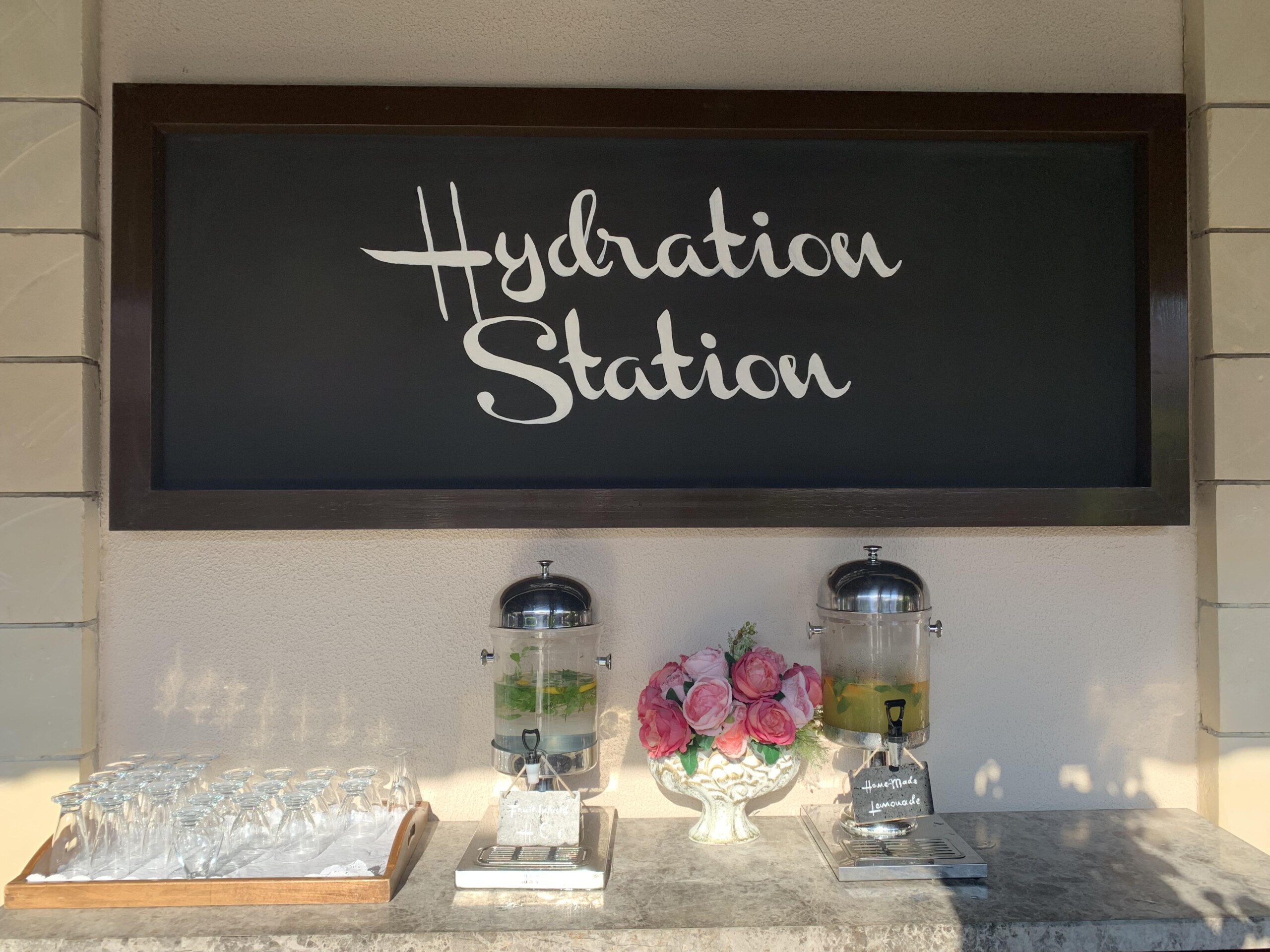
      Hydration stations are water dispensing systems strategically installed in common areas or on each floor of hotels. These stations provide guests with easy access to clean, filtered water, often offering both room temperature and chilled options. Many hotels complement these stations with complimentary reusable water bottles, encouraging guests to refill throughout their stay.

      Hydration Station in AC Hotel Houston
      Hydration Station in AC Hotel Houston

      Benefits for Guests

      1. Convenience: Guests no longer need to rely on small bottles of water in their rooms or make trips to vending machines. With hydration stations on every floor, refreshment is always just steps away.
      2. Health and Wellness: Easy access to water promotes proper hydration, which is essential for guest well-being, especially for travelers adjusting to new climates or recovering from jet lag.
      3. Cost Savings: Complimentary water refills mean guests don’t have to purchase bottled water, leading to significant savings during their stay.
      4. Customization: Some advanced stations offer flavoring options or sparkling water, allowing guests to personalize their hydration experience.

      Environmental Impact

      The introduction of hydration stations aligns perfectly with the growing focus on sustainability in the hospitality industry:

      • Reduction in Plastic Waste: By eliminating the need for single-use plastic water bottles, hotels significantly reduce their plastic footprint.
      • Energy Efficiency: Modern hydration stations are designed to be energy-efficient, consuming less power than traditional water coolers or mini-fridges stocked with bottled water.
      • Water Conservation: Filtered tap water requires far fewer resources to produce and transport compared to bottled water.

      Operational Advantages for Hotels

      1. Cost-Effective: While there’s an initial investment, hydration stations can lead to long-term cost savings by reducing the need to purchase, store, and dispose of bottled water.
      2. Brand Enhancement: Hotels that offer hydration stations are often perceived as modern, health-conscious, and environmentally responsible, enhancing their brand image.
      3. Maintenance and Hygiene: These stations are typically easier to maintain and keep hygienic compared to traditional water dispensers or constantly restocking mini-fridges with bottled water.

      Implementation Tips for Hotels

      • Strategic Placement: Install stations in easily accessible areas on each floor, near elevators or ice machines.
      • Clear Signage: Use informative signs to guide guests to the stations and explain their benefits.
      • Quality Matters: Invest in high-quality filtration systems to ensure the best-tasting water.
      • Branded Bottles: Offer reusable water bottles branded with the hotel logo as a practical and memorable souvenir.
      • Staff Training: Ensure staff can answer questions about the stations and promote their use to guests.

      Case Study: Noelle Hotel in Nashville

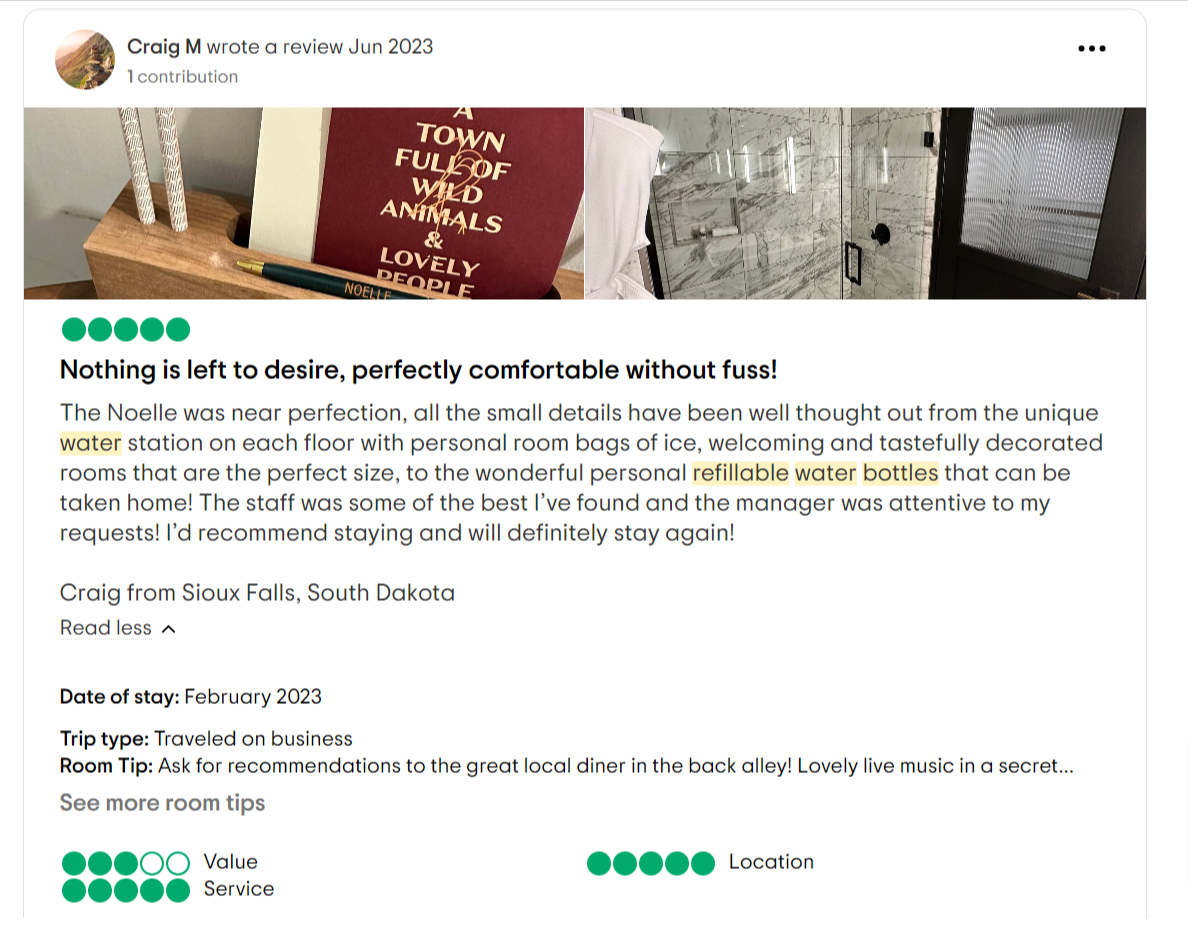
      While my experience is primarily in the Indian market, it’s instructive to look at successful implementations globally. The Noelle hotel in Nashville provides an excellent example of successful hydration station implementation. According to guest reviews, the hotel offers water stations on each floor, complete with cold and hot water options, and fresh bags of ice. Guests particularly appreciate the complimentary refillable water bottles provided by the hotel.

      One guest, Craig from Sioux Falls, South Dakota, noted: “The Noelle was near perfection, all the small details have been well thought out from the unique water station on each floor with personal room bags of ice… to the wonderful personal refillable water bottles that can be taken home!”

      Another guest, Lorraine from Wantagh, New York, mentioned: “The hydration station on each floor with the complimentary refillable water bottles is definitely a plus.”

      These testimonials highlight how hydration stations can significantly enhance the guest experience and contribute to positive reviews.

      Noelle's guest review regarding Hydration Stations

      Noelle has received numerous positive reviews on their hydration station on TripAdvisor.

      Gallery of Various Hydration Station Implementations in Hotels

      The Indian Context

      In India, where water quality can be a significant concern for many travelers, hydration stations offer a reliable and eco-friendly solution. They address guests’ need for safe drinking water while demonstrating a hotel’s commitment to both guest comfort and environmental responsibility. From a procurement perspective, which is a key focus for us at Zarnik, hydration stations can streamline operations for hotels in India. By reducing the need for individual water bottles, hotels can simplify their supply chain and potentially reduce costs in the long run.

      The Future of Hydration in Hospitality

      As sustainability continues to be a key focus in the hospitality industry, both in India and globally, hydration stations are likely to become a standard feature in hotels worldwide. Future innovations may include smart dispensers that track water consumption, offer more customization options, or integrate with hotel apps for a seamless guest experience. In conclusion, hydration stations represent a win-win solution for hotels and their guests. By providing convenient access to quality water while reducing environmental impact, these installations are not just a trend, but a significant step towards more sustainable and guest-centric hospitality practices. As we continue to innovate in the hotel supplies industry, we’re excited to see more hotels in India and beyond adopting solutions like hydration stations, enhancing guest experiences while promoting sustainability. 


      About the Author: Azhar Umar is the CEO and CTO of Zarnik, India’s first B2B e-commerce marketplace for hotels. With an MBA from IIM Kozhikode and extensive experience in the hospitality industry, Azhar combines his expertise in technology and hotel operations to revolutionize the hotel procurement process. His insights are shaped by hands-on experience in addressing the unique challenges faced by hotels in India. 


      We invite our readers to share their experiences with hydration stations in hotels, whether in India or elsewhere. Hoteliers, we welcome your insights on the challenges and successes you’ve encountered while implementing these systems. Your thoughts and experiences are valuable to us!